
A Complete Overview of Modern Mailing Systems
While emails are quick, direct mail still holds a lot of importance. 85% of consumers agree that they feel a stronger connection with brands through offline communication. This impact makes direct mail a vital tool to build trust with your customers, so all your communication is noticed and acted upon.
But handling a large volume of direct mail can come with a lot of challenges. Consider the time and money required for manually creating, printing, folding, stuffing envelopes, and applying postage for thousands of letters. This process is not only slow and expensive, but it is also entirely manual. As a result, it is prone to a lot of human errors. It is an outdated and inefficient way of approaching direct mail, not ideal for companies focused on efficiency.
That is where modern mailing systems come into the picture. In this blog, we will discuss how businesses can use automated platforms to improve direct mail. These platforms can instantly turn your message and mailing list into perfectly printed, addressed, and delivered mailpieces, every single time. We will also cover the different types of office mailing solutions and how to choose the one which is right for you.
Key Takeaways
- Mail holds unique authority and is vital for building customer trust and sending critical, non-negotiable communications.
- Manual mailing processes are slow, expensive, and introduce high risk through human errors like mismailing. But automation is the path to business efficiency.
- The most advanced solution is an API-driven system, which turns digital data into physical mail automatically. As a result, it provides instant scalability and a complete audit trail.
- When choosing a Print & Mail solution, prioritize providers that guarantee security and compliance. This can be measured by certifications like HIPAA and SOC-2 Type II.
- PostGrid’s Print & Mail API eliminates all manual labor, ensures 100% address accuracy, and integrates instantly. As a result, you can transform mailing into a secure, hands-off operation.
What Are Mailing Systems?
A mailing system is the method a business uses to prepare and send physical communications. In the past, this term simply meant a postage meter or a mailroom full of people. Today, modern mailing systems are much more advanced. They are sophisticated, technology-driven solutions that connect your digital world to the physical post office.
Think of a modern mailing system as a highly efficient communication engine. It doesn’t just put a stamp on an envelope; it handles the entire printing services workflow automatically.
The Traditional Mailroom
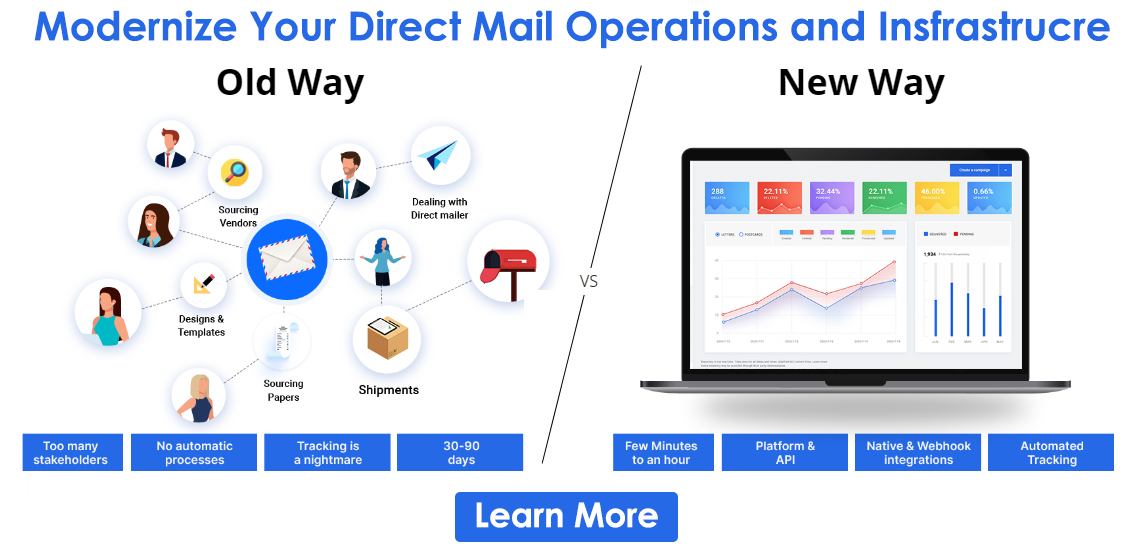
Traditional mail workflows involve many manual steps:
- Manual Printing: Employees print large batches of documents.
- Paper Handling: They physically fold each page and match it to the correct envelope.
- Postage: They run envelopes through an office postage machine.
- Delivery: They transport the mail to the post office.
This manual chain is slow, expensive, and a big source of human error. If an employee accidentally puts the wrong invoice into the wrong envelope, it creates a costly mistake and damages customer trust.
Modern Mailing Systems
A modern mailing system is an integrated platform that completely replaces this manual process. It uses specialized software and industrial-grade printers to turn data into deliverable mail. How does the mail system work? Here is what defines a modern mailing system:
- Digital Transformation: The system connects directly to your business data. This includes your CRM, accounting systems, and Enterprise Resource Planning (ERP) platforms.
- Data-to-Mail: It takes your digital file (like a PDF of an invoice) and uses the address information to handle all physical steps. This process is called Print & Mail automation.
- Scalability: These systems are built to handle massive volumes. They can process a few hundred pieces or hundreds of thousands of pieces in a single batch, delivering consistent quality every time.
A modern mailing system ensures speed, accuracy, and significant cost savings via automation. This is something that traditional methods simply cannot offer.
Types of Mailing Systems
Not all mailing systems are created equal. They are divided into categories based on their complexity, scale, and level of automation. Businesses choose from three main types of mailing systems, ranging from traditional to outsourced, digital solutions.
Traditional In-House Mailrooms
This system relies on equipment and labor located entirely within your own office or facility.
- Postage Meters: These machines weigh mail and print postage directly onto the envelope. They need an employee to load envelopes, enter postage rates, and manage postage funds. Although they automate stamp application, folding, and stuffing still require a lot of manual work.
- Folder/Inserter Machines: These machines automatically fold pages and place them into envelopes. They save time on manual tasks but are costly to buy, need regular maintenance, and still require an employee to prepare and load the documents.
- The Workflow: This system offers limited savings and minimal security against mismailing. Your business is still responsible for buying supplies like paper, envelopes, and ink. Also, you need to maintain the equipment and follow all postal regulations.
Hybrid Mail Solutions (Outsourced Printing)
Hybrid mail represents automation by outsourcing the most labor-intensive parts of the process.
How It Works: You create digital documents and send the print-ready files to a third-party service provider. This service provider then prints, stuffs, meters, and delivers the mail to the postal service.
Key Advantage: There is no need for expensive in-house equipment, and it reduces staffing needs for mail handling. Your employees send a file instead of physically handling paper.
Best For: Companies with changing mail volumes that want to cut physical overhead without adopting complex sorting machines.
Print & Mail API for Automation (The Modern Solution)
This is the most advanced and powerful type of mailing system, representing true automation. It is the preferred choice for businesses built on digital platforms and high efficiency.
How It Works: This system uses an Application Programming Interface (API). Your software (CRM, ERP, or web app) talks directly to the mailing provider’s platform. When a trigger occurs, like an invoice being marked “due”, your system sends data (customer name, address, amount) through the API. The platform instantly creates, prints, and mails the document without any human involvement.
Key Advantage: It offers hands-off, automatic scaling. The mail runs in the background like any other cloud service. As a result, businesses can send personalized documents globally and maintain a perfect audit trail.
Best For:
- Organizations with high volumes
- Businesses requiring complex integrations
- Companies needing flawless security and speed for critical, regulated communications, mainly including financial or healthcare statements
Why Should You Leverage an Automated Mailing System to Print & Mail Your Communications?
Automated sorting and routing mean more efficient, secure, and modern business operations. Moving from manual mail handling to a computerized system provides significant advantages.
Massive Cost Reduction
Reduce manual mailing and postage costs far more than most companies realize. So, how does the mail system work in favour of businesses? Automated systems immediately cut these expenses in several areas:
- Labor Costs: Automation means employees don’t spend hours printing, folding, stuffing, and tracking. You reallocate this time to core business tasks, maximizing employee value, efficiency, and accuracy.
- Physical Supplies: Automated mail houses buy paper, envelopes, and ink in huge quantities. They pass these bulk savings on to you, meaning you pay less for materials than if you bought them retail.
- Postage Discounts: Automated systems use sophisticated software for presorting mail. This process sorts mail by ZIP code, helping the provider qualify for bulk mailing discounts. As a result, you save money on every piece sent.
Elimination of Costly Human Error
The risk of error is high in any manual process in businesses of all sizes. Automation and data analytics remove this risk entirely, ensuring perfect delivery and security.
- Zero Mismailing: Automated systems use machine-based quality control. They ensure the right document always goes into the right envelope for the right customer. This prevents sensitive invoices from being sent to the wrong client. It helps protect your company’s compliance and reputation.
- Address Accuracy: Modern systems include powerful address validation tools. They automatically check and correct addresses against official postal databases before printing. This dramatically reduces the number of pieces returned as “Undeliverable as Addressed (UAA)”. As a result, you can ensure your communications reach their target.
Superior Speed and Reliability
- Faster Processing: An automated system can process, print, and prepare thousands of letters and packages for mailing in very little time. It delivers them to the post office much faster than manual mailroom solutions ever could. Often, mail is printed and sent out the same day you submit the file.
- Reliable Delivery: The system handles mail volume fluctuations easily. This means that your critical documents never sit around waiting to be processed. The consistency and speed result in a more reliable delivery schedule for your customers.
Enhanced Security and Compliance
- Physical Security: You have full visibility into each stage, from when your data was received, printed, mailed, and delivered. This protects your documents while they are being handled.
- Digital Traceability: API-driven systems provide a complete audit trail. You know exactly when your data was received, when the mail was printed, when it was inducted into the post office, and often, when it was delivered. This traceability is essential for meeting compliance standards like HIPAA or financial regulations.
- Data Protection: Secure data is transmitted using encryption. As a result, the risk of a digital security breach during the mail preparation process is minimal.
How to Pick the Right Mailing System?
Choosing the best mailing system for your business is a strategic decision. To find a system that aligns with your company, you must look beyond the basic cost. On the contrary, you must evaluate your company’s scale, security needs, and existing technology. Follow these critical steps to select the right mail center:
Evaluate Your Volume and Growth
- Low to Medium Volume (Under 500 pieces per month): A basic in-house solution (like a simple postage meter) might seem adequate. However, even at this level, consider a hybrid mail solution. Why? Because the time spent by an employee on mail can still be better used elsewhere.
- High Volume and Scaling: API automation is mandatory if you have to send thousands of pieces monthly or plan for rapid growth. Manual or hybrid solutions will quickly become bottlenecks. And in the long run, it slows down your growth and increases costs as your volume rises.
Prioritize Security and Compliance
- Look for Industry Certifications: Ensure the provider meets strict standards such as HIPAA and SOC-2 Type II. This is important for healthcare data and for overall data integrity and security. These certifications prove the provider handles your information responsibly.
- Check Data Handling: The right system should use encrypted transmission methods, such as HTTPS or SFTP, to transfer your print data. It must also maintain strict physical security in its printing facilities. This includes measures like video monitoring and controlled access.
Assess Integration and Technology
The best mailing system should work seamlessly with the software you already use every day.
- API Functionality: If you want true automation, the system must offer a robust API. This allows developers to integrate mailing into their workflows. As a result, it becomes a hands-off process triggered automatically by their CRM or ERP.
- Template and Design Tools: Look for a system that allows you to design or upload templates easily. You should be able to make changes to your document designs without involving a developer every time.
- Audit Trail: The system must provide instant, detailed tracking. You should know exactly when your mail was printed, mailed, and delivered to meet compliance and customer service needs.
Review Service and Scalability
- Support and Reliability: What happens when you face a deadline or a technical issue? Choose a provider known for reliable infrastructure and responsive technical support. Downtime in a high-volume system can be catastrophic.
- Global Reach: Make sure your mailing system supports global addressing if you have international customers. This ensures that your mail is delivered accurately even outside of your home country.
Evaluating these factors in relation to your operational needs can help you choose automated digital mailing systems. It ensures your business gains a solution that is secure, efficient, and scalable.
Streamline Your Mailing Needs With PostGrid Offline Communication Solution
Physical mailing services are still essential. It builds trust and handles critical communications better than email. However, manual mailing operations are a huge problem. It costs too much money, takes too much time, and creates unacceptable human errors. Switching to automated mailing systems is the only smart, scalable path forward for any serious business.
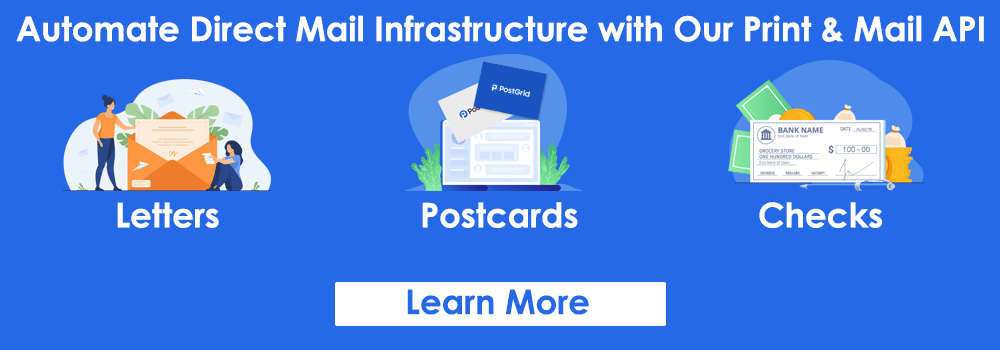
The clear solution is API-driven automation. PostGrid’s Print & Mail solution combines with your existing software to create a hands-off digital workflow. This approach eliminates all manual labor and guarantees perfect execution. This is not just an upgrade; it is a total transformation of your communication security and efficiency.
Do not let outdated mailing equipment waste your budget and expose you to risk. PostGrid offers the most secure and scalable platform available. We integrate instantly to handle all your offline communications flawlessly.
Ready to eliminate manual printing, achieve 100% mailing accuracy, and reduce costs per piece of mail? Request a demo today!
What Is the Delivery Time for Priority Worldwide Service to the USA?
Priority Worldwide service reliably delivers to the USA within one business day.
How Long Does It Take for Xpresspost International to Deliver to Other Countries?
Xpresspost International typically delivers to other countries within 4 to 7 business days.
What Is the Weight Limit for Small Packet International?
The weight limit for Small Packet International is under 2 kilograms.
Are Customs Duties Included in the Shipping Cost?
Customs duties are not included in the shipping cost; they are charged to the recipient upon delivery.
How Can I Track My International Shipment With Canada Post?
To track your international shipment with Canada Post, simply use the tracking number provided on your shipping label. This will allow you to monitor the status of your package throughout its journey.