

USPS Special Delivery Services: Know the USPS Special Services to Benefit Senders
USPS Special Delivery is a service where people can pay a small fee to buy stamps that mark their mail as “urgent.” Introduced in 1885, this service ensures urgent mail is delivered by a special carrier right away, instead of going through the regular mail delivery system.
Special Delivery was created to make sure parcels and letters are delivered faster than First-Class Mail. It means the items were sent to the recipient as soon as the Post Office got them, without waiting for the next scheduled delivery.

Key Takeaways:
- When using Special Delivery stamps, you still need to use regular postage stamps. The Special Delivery service cost a bit more, but it was a convenient choice for sending important domestic mail shipments.
- A law passed by Congress started the USPS Special Delivery service on March 3, 1885. At first, it was only available in towns with at least 4,000 people. In 1886, another law expanded the service to all towns and their Post Offices.
- On October 1, 1885, the American Bank Note Company released the first stamps with the words “SECURES IMMEDIATE DELIVERY AT A SPECIAL DELIVERY OFFICE.” They were printed on unmarked paper and had 12 holes per 2 centimetres.
- Over the years, the USPS released many Special Delivery stamps with different designs and colours. On February 28, 1925, a law allowed these stamps to be used on Fourth-Class Mail. The cost of Special Delivery envelopes also changed over time, based on the type of mail.
- The Post Office offers several extra services for an additional fee, such as Certified Mail, Registered Mail, and Return Receipt.
What Is USPS Special Delivery Mail?
The USPS first introduced Special Delivery in 1885 to handle urgent mailpieces efficiently. Mailers would need to pay a nominal fee to purchase Special Delivery stamps to mark their items as “urgent.”
Such pieces were delivered by a special carrier as soon as they were received at the Post Office. Hence, Special Delivery items were not delivered through the regular mail delivery system.
This option was available for use along with all USPS mail classes. But, please note that mailers needed to use Special Delivery stamps in addition to regular postage stamps, not instead of them.
The Special Delivery Postal Service increased the postage by a few cents. Still, it was a convenient option for mailers for mailing important items.
Also, apart from the US, such express delivery services are offered by several countries like Canada and the UK.
For example, Royal Mail offers options like Special Delivery guaranteed by 9 am and 1 pm. Similarly, Canada Post also provides its mailers with next-day and 2-day domestic delivery to help send urgent items.
However, Special Delivery was discontinued in 1997 as it had become unpopular and unnecessary by then.
Let us now move ahead to discover more about its origin, evolution, and history!
How Did Special Delivery Mail First Come Into Existence?
A Congress’s Act introduced the USPS Special Delivery service on 3rd March 1885. During the initial years, it was only available in towns with a population of 4,000 and more.
However, the service was extended to all towns and the respective Post Offices by another Act of Congress in 1886.
Special Delivery was established to ensure urgent delivery of parcels and letters—in a shorter time than First-Class Mail, the standard mailing option. It means that the items were sent to the recipient immediately after the Post Office received them, without waiting for the next scheduled delivery.
The process of sending Special Delivery Mail was the same throughout the years. But, there were numerous changes to the design, colours, and perforation of the Special Delivery stamps.
Stamps Issued Between 1885 and 1895
On 1st October 1885, the American Bank Note Company issued the first stamps bearing the words “SECURES IMMEDIATE DELIVERY AT A SPECIAL DELIVERY OFFICE.” They were printed on unwatermarked paper sheets and perforated 12.
After the new Act in 1888, the inscription read: “SECURES IMMEDIATE DELIVERY AT ANY POST OFFICE.” All the stamps issued in the 19th century carried the exact words from here on.
Both of the above stamps were printed in blue. But, between the years 1893 and 1894, they were published in orange to avoid confusion with Columbian Exposition Issue’s stamps.
But, how much to send Special Mail Delivery? Well, every stamp’s cost was 10 cents back then. to ship your items as Special Delivery Mail.
In fact, all the stamps had the price written at the bottom.
The US Bureau of Engraving and Printing engraved the remaining two types of Special Delivery Stamps printed in this period.
Although both were similar in design and perforated 12, they were different. The stamps issued in 1894 were printed on unwatermarked paper, whereas those issued in 1895 were printed on USPS double-lined watermark paper.
All five types of 10c stamps discussed above carried a graphic of a running mail carrier. Here’s an image:
Stamps Issued Between 1902 and 1917
The following five issues had a different vignette printed on them. Instead of a running mail carrier, the stamps featured a bicycling carrier.
They were all issued in different blue, violet-blue, and ultramarine colours.
Below are the varying features of each of the five types of stamps issued during this period:
- The first type was perforated 12, engraved, and printed on USPS double-lined watermark paper. It was issued in the year 1902.
- The second type was issued in January 1911 and had almost the same features as above. But, they were printed on USPS single-lined watermark paper.
- The USPS issued the third type of stamps for 1st Class Special Delivery in 1914 on perforated 10, USPS single-lined watermark paper.
- The fourth and fifth types were perforated 10 and 11, respectively. They were both printed on unwatermarked paper and issued during 1916 and 1917.
On 12th December 1908, the USPS had come up with a new stamp format. These new stamps were issued in green, yellowish-green, and dark green shades. They featured the helmet of Mercury and had the words “US POSTAGE SPECIAL DELIVERY” engraved on them.
However, they were soon discontinued, and the USPS started using the older stamp designs again.
Please note: The arrival time of First-Class Special Delivery Mail was between one to five working days.
Stamps Issued Between 1918 and 1969
Over the years, the USPS issued many Special Delivery postal service stamps that featured different graphics and colours.
On 28th February 1925, the Postal Service Act allowed Special Delivery stamps on Fourth-Class Mail.
Also, the Special Delivery envelope costs change from time to time, depending on the mail class. The USPS started issuing stamps worth 15, 20, and 25 cents.
However, these stamps were rendered useless in 1997 when the USPS discontinued the Special Delivery service. The reason was the introduction of Priority Mail and Priority Mail Express, although they did work concurrently for about 20 years.
These options covered all the benefits of Special Delivery, along with more benefits.
USPS Special Services
Now, you can avail yourself of the USPS special services rather than sending Special Delivery letters Post Office.
These services do not speed up your delivery process but make your mailing experience a lot better.
There are several special services that the Post Office offers for an extra charge, like:
Certified Mail
Certified Mail helps mailers get proof of mailing in the form of a receipt. The USPS also stores a delivery record (recipient’s signature) at the Post Office for up to two years.
You may request to get the signature mailed to you when posting your items. Or, you can request the same later on as long as the USPS has it in the records.
Mailers receive real-time notifications about every delivery attempt and when the delivery was completed.
It costs you $3.75 but offers you peace of mind while mailing confidential and crucial documents.
You can pair Certified Mail with First-Class Mail, First-Class Package Service (Commercial), and Priority Mail.
Plus, there are three additional services that you can opt for along with Certified Mail:
- Restricted Delivery: Mailers can direct the delivery of their items only to the addressed receipt of an authorized agent.
- Adult Signature Required: Mailers can direct deliveries only to an adult (at least 21 years).
- Adult Signature Restricted Delivery: Mailers may limit delivery of their Certified Mail pieces to only a specific person or authorized agent who is an adult. (This option is available on the USPS website and for commercial mailers)
Registered Mail
It is the safest USPS mailing option available and costs $13.75. Mailers use it for mailing fragile or valuable items.
You get the following benefits on using Registered Mail:
- Mailing receipt
- Electronic delivery verification (on request)
- Insurance coverage up to $50,000
Also, you can use this mailing service with First-Class Mail, First-Class Package Service (Retail and Commercial), and Priority Mail.
Return Receipt
You can request a Return Receipt with both Certified Mail and Registered Mail. A Return Receipt carries the recipient’s signature and is mailed back to you as evidence of delivery. It costs only $1.85 for an email receipt and $3.05 for a mail receipt.
There are several more special services provided by the USPS, like:
- USPS Tracking Plus
- Signature Confirmation
- Hold for Pickup
- Collect on Delivery
- Special Handling
- Certificate of Mailing, etc.
Remember that these services do not decide the mailing speed. The arrival time depends on which mailing class you pair up with these services.

Wrapping Up
The USPS Special Delivery service was beneficial for mailers sending time-bound items. It enabled them to send anything across the country in no time and at very reasonable rates.
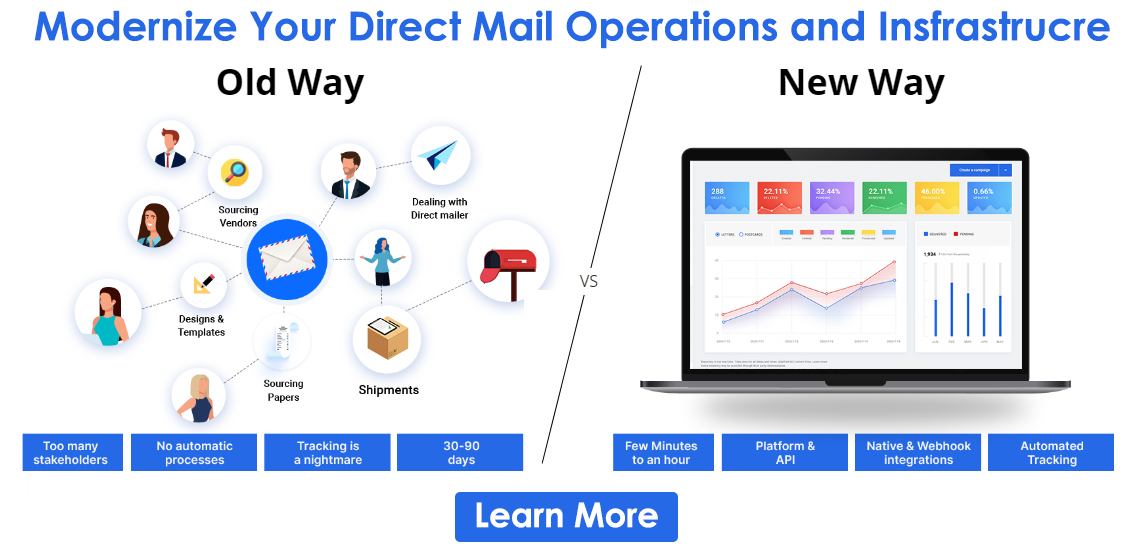
But, mailers need to deal with a lot more than just shipping their items. For example, they also need to undertake tasks like creating and printing them. Furthermore, they also need to affix the correct postage and take the mail to the Post Office.
However, you no longer need to carry out these tasks by yourself. PostGrid’s direct mail API can help you get everything done in an automated manner.
Plus, we have many more features to offer, like per-piece tracking, HTML design templates, reporting, analytics, etc.
You can integrate our API into your system and get started within minutes! Want to create, print, and mail your items altogether with a few clicks? Sign up now.