
leadership-lessons-from-accounts-payable-strategies
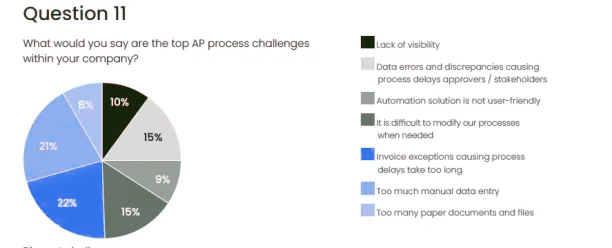
Businesses deal with infinite challenges within their accounts payable departments, slowing their processes and hampering work productivity. They include slow invoice processing, double payments, unauthorized purchases, etc.
A study by Ardent Partners found that 47% of invoice approvals or payments take too long. It also says that 23% of late supplier bill payments and 22% of high invoice process expenses have slowed AP processes drastically.
Since firms are already tasked with getting leads, managing sales, marketing new items, handling client satisfaction, etc., their staff barely has time to cross-check AP operations.
Well, it is not hard to say that these challenges can cost organizations hundreds and thousands of CADs. Thus, they require solutions—those that resolve these shortcomings and make them capable of bringing in efficiency, promptness, and budget-friendly behaviors.

The Common Challenges the Accounts Payable Industry Encounters
Accounts payable is an expensive department! It takes a lot of money and a lot of effort to process one invoice. Imagine your firm creating a hundred of them or even more!
Another key fact to remember is that only 5% of medium-scale businesses have leveraged end-to-end automation for their accounts payable and receivable tasks.
Most companies have yet to employ efficient accounts payable strategies, automate their work, and cut expenses. Hence, they face the following challenges:
Vendor Invoice Management
Handling bulk invoices each month can lead to losing track easily. Your teams might lose some invoices and miss due dates, primarily during peak business phases with tons of purchase transactions pouring in!
You might only notice a missing invoice after missing the due date and getting an unpaid invoice letter. It might wreck your business relationships and reflect poorly on your brand.
Missed and delayed payments can cause suppliers to lose trust in your business. And it might take a while for you to find new suppliers or manufacturers who can match the current product quality, affecting your sales negatively.
Payment Errors
16% of leaders in financial teams or businesses believe that duplicate invoices are their primary concern. They lead companies to make double payments, causing losses and budget overuse.
It happens because many suppliers send a second invoice when they don’t get the payment by the due date. And organizations end up paying both invoices, causing confusion and impacting cash flows.
Manual Database Entries
Typical AP processes include entering vendor invoice details, getting approvals, and paying the bills on time. However, manual data entry can lead to increased errors, like incorrect payments and calculations, impacting your brand’s reputation and vendor connections.
Your staff will need to manually skim the spreadsheets and files to find errors (once you know something is wrong), which can take days or even weeks.
Missed Purchase Orders
Purchase orders are a crucial part of accounts payable to avoid unauthorized purchases and pay the correct amount to vendors. They also allow you to track the purchased products, their delivery dates, and the agreed payment terms.
However, many organizations have stopped creating purchase orders owing to the time and effort it takes. As a result, they face many difficulties, like improper tracking, delayed deliveries, and payment miscommunications.
These are only some of the many challenges AP teams face daily. They require a solid mechanism to streamline the processes, cut time wastage, and save resources. Also, they need a solution to maintain vendor relationships and adequate cash flows.
5 Leadership Lessons From Deploying Effective Accounts Payable Strategies
You can resolve the above challenges with analytical solutions, benefiting your AP departments and boosting overall organizational efficiency.
Every strategy teaches you a lesson in business management—how to stay updated, catch up with competitors, and serve your customers better! Here are some of these lessons:
Strategy 1: Cut Expenses and Get Discounts
Suppliers offer many early bird discounts to get buyers to pay fast, which benefits both parties. However, 80% of supplier discounts remain unclaimed due to payment delays. It is a huge figure, primarily for businesses that want to focus on cutting costs and taking a more strategic approach to paying bills.
The best way to grab these discounts is to track delivery and payment dates in advance. Your AP teams should be ahead of all invoices, ensuring they get the early bird discount and show the cost reduction clearly in your account statements.
This strategy has twofold advantages: You get to pay less than what’s decided, which can add to significant savings over some time. And you can nurture your vendor relationship by being committed to being among the early payers, which everyone appreciates.
The Lesson: This strategy highlights the leadership trait of finding the most cost-efficient way to do something. Be it a discount claim or finding suppliers offering reasonable prices, the lesson goes a long way in generating high company profits.
Strategy 2: Outsourcing for the Win
51% of finance industry leaders have started outsourcing AP operations to address employee shortages, rising expenses, and other challenges discussed above. They want to turn to reputed companies that are experts in the field and can help navigate these issues.
Not surprisingly, outsourced AP processes cost less and are better aligned with the company’s goals. These vendors dedicatedly work on improving your experience and letting you maintain positive supplier connections.
The Lesson: Taking care of every operation or task in-house is practically impossible. Being ready to enlist expert help and relieve your staff from manual, time-consuming activities can turn things around for every organization.
Strategy 3: Stop Spreadsheet Reliance
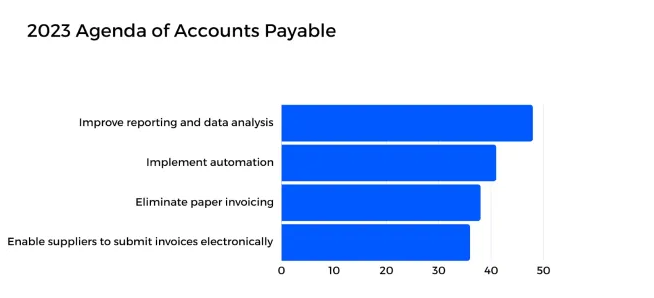
Going paperless within your organization and taking a more digitized approach can let you centralize accounts payable and achieve high levels of efficiency. Of course, you need to let go of your traditional processes of creating spreadsheets and copying and pasting data manually.
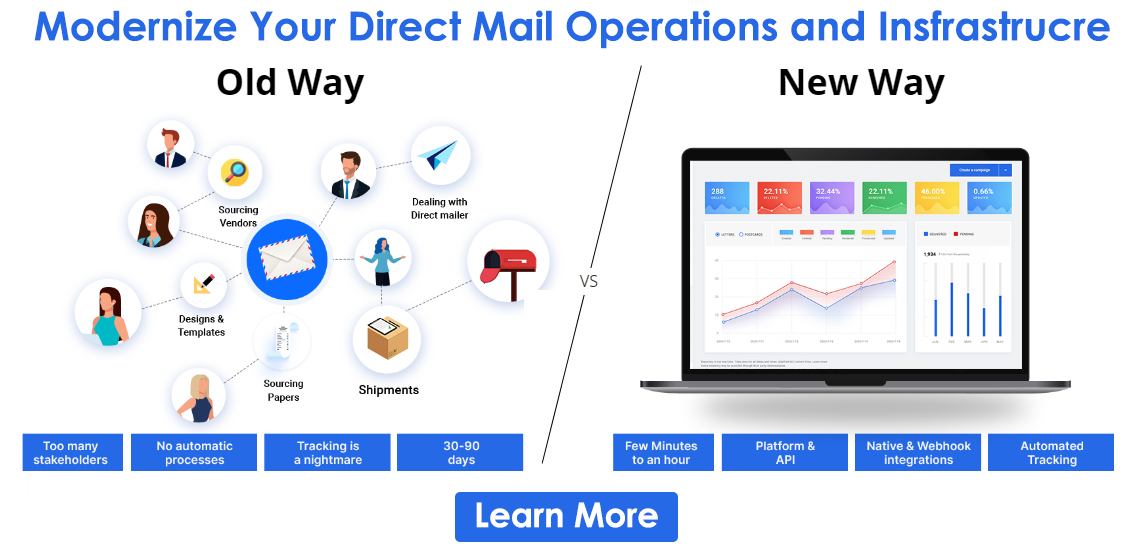
The key is to integrate your CRMs containing supplier and other crucial details with a dedicated accounts payable system. For instance, PostGrid can enable you to automate your AP processes by letting you create, print, and send purchase orders, agreements, renewals, invoices, etc., online. You can leverage automation to ship these mailers to the correct recipients and leave no scope for human-generated mistakes.
Please note that invoice automation can reduce the processing cost from CAD 15 to CAD 3 per invoice. Also, overall AP automation saves your business 70% of the time your teams would normally spend.
The Lesson: Relying on AP automation can allow you to reduce errors, generate invoices in no time, and send them to relevant suppliers without you doing anything. Companies embracing automated processes are likelier to overtake their competitors.
Strategy 4: Work on Supplier Management
You must have heard that “Communication is key.” It stands true in the business world, primarily when speaking of company-customer or company-supplier relationships.
Businesses must invest in supplier management, streamlining all tasks from approaching them to sending an estimate to fulfilling bills.
A report from the Aberdeen Group states that organizations with such effective AP plans can boost supplier relationships by 38%, which is a win-win.
You can integrate PostGrid’s direct mail API into your CRM or finance software to connect with suppliers regularly without your active participation. Set up triggered campaigns to send relevant and timely correspondence and payments.
The Lesson: Investing in relationships automatically translates to higher profits—a rule all businesses must remember.
Strategy 5: Strengthen Internal Security Measures
Firms can lose up to 5% of their profits on AP fraud yearly. It is a median loss of nearly CAD 104,000, a significant account to lose because of security attacks.
What you can do is draft and implement strict governance policies and internal controls to eliminate or minimize the risk of encountering financial fraud. They can
- Enforce approval policies to avoid unauthorized payments, set approval restrictions, and get a heads-up from multiple approvers for large purchases.
- Conduct regular AP audit trials to notice and resolve obvious flaws or bugs that can make the organization a victim of fraud.
- Allocate crucial AP-related processes and decision-making across many employees, preventing individual persons from approving payments and purchases across the entire department.
The Lesson: The rising data security breaches are a concern, primarily within your finance departments. Thus, it is best to be prepared, improve internal policies, and have a strong audit mechanism. Finance leaders must take precautions instead of finding ways to reverse the effects of fraudulent activities.
Get, Set, Measure
Once you are set with your accounts payable strategies, you must curate a way to measure and track their performance. Here are some metrics you can use:
| Total Number of Raised Invoices | Average Cost Per Bill | Average Time Taken to Process Each Invoice | Error Rate | Claimed Discounts |
| You can track the number of invoices your AP teams have raised daily, weekly, or monthly. It allows you to match the quantity with the number of payments they processed. | You can get this figure by dividing the total AP expenses by the number of processed invoices. A low average cost per invoice indicates your AP processes are working well. | Reveal time and payment gaps by learning how much time your team takes to raise an invoice. The shorter the time, the better the strategies work. | Dividing the number of incorrect or delayed payments with the number of raised invoices gives you a percentage you can refer to as the error rate of your AP department. Most AP strategies we discussed directly contribute to reducing this rate. | The number of discounts you claimed from suppliers and the percentage of the savings compared to the prices you agreed to is a crucial indicators of how well your processes are working. |
Automation: Your Action Plan to Smart and Inexpensive Accounts Payable Activities
Businesses can learn many leadership lessons while transforming their paper-based and manual AP processes to digitized operations. They can learn how to embrace technology, find affordable solutions, outsource, and work on their third-party relationships.
Only 39% of businesses have automated their AP tasks, but more firms are swiftly moving in the same direction. You can be one of them, getting fruitful results from your online efforts.
PostGrid can assist you in the process by letting you automatically send purchase documents, invoices, supplier communications, etc., using our API or dashboard. Get a demo to learn more!