

Top 12 Healthcare Direct Mail Best Practices to Help You Advertise Your Services Effectively
Healthcare direct mail remains one of the most effective ways to connect with patients and healthcare professionals in Canada. While digital channels like email and social media get a lot of attention, they are also incredibly crowded. Your message competes with hundreds of other notifications every single day. A well-crafted piece of physical mail cuts through that noise in a way that a promotional email simply cannot.
Whether you run a small family clinic, a dental practice, or a large healthcare organization, direct mail can help you stay visible, build trust, and drive real patient engagement.
This guide walks you through what it is, why it still works so well, and the 12 best practices that will help you get the most out of your campaigns.
TL;DR
- Healthcare direct mail consistently outperforms email, with response rates of 2%–4% versus email’s 0.6%, making it one of the highest-ROI channels available to Canadian providers.
- Physical mail builds patient trust and stays in the home for days or weeks, giving your clinic name repeated exposure that no digital channel can match.
- Physician-facing campaigns work best when personalized beyond just a name, referencing specialty, practice type, and patient demographics, signalling relevance and earning attention.
- Patient-facing campaigns should lead with benefits, not services, and include every contact option so patients can respond through their preferred channel.
Key Takeaways
- Canada’s mailbox is far less crowded than the inbox; most Canadians receive significantly less physical mail than they did a decade ago, giving healthcare providers a real competitive edge.
- Credibility is the currency with physicians: data, clinical evidence, and cited sources will always outperform a list of product benefits when marketing to healthcare professionals.
- A single, specific call to action, one URL, one QR code, one phone number, drives more responses than giving recipients multiple options to consider.
- Direct mail amplifies digital: pairing physical mail with email follow-ups and targeted ads creates multiple touchpoints that compound over time and make attribution easier.
- Automation changes the economics of direct mail: triggered campaigns tied to patient milestones (first booking, missed visit, care journey stages) run continuously without manual effort.
What Is Healthcare Direct Mail?
Healthcare direct mail is a marketing approach where clinics, hospitals, dental offices, pharmacies, and other healthcare organizations send physical mail pieces directly to patients or physicians. Unlike digital advertising, there are no algorithms, no spam filters, and no middlemen standing between you and your audience.
It works for any healthcare organization that wants to increase patient visits, promote specific services, or build relationships with referring physicians.
The format can range from a simple postcard reminding a patient about an overdue appointment to a detailed letter announcing a new specialist at your clinic.
Healthcare organizations use direct mail for a wide range of purposes, including appointment reminders, new patient welcome letters, seasonal health campaigns, patient education materials, physician outreach, and billing statements.
The common thread is that all of these pieces land directly in someone’s hands, which gives you a much better chance of being noticed and remembered.
Why Healthcare Direct Mail Still Works in Canada?
A lot of marketers assume direct mail is outdated. The reality is the opposite. Direct mail has seen a strong resurgence in recent years, largely because digital channels have become so saturated.
The total value of the direct mail industry has grown consistently, and healthcare is one of the top-performing sectors within it. Here are the main reasons this channel continues to deliver strong results for Canadian providers:
It Builds Trust in a Way Digital Cannot
Choosing a healthcare provider is a very personal decision. Patients want to feel confident in who they are trusting with their health.
Physical mail carries a level of credibility and authenticity that digital ads struggle to match. When a patient receives a thoughtfully designed piece of mail from your clinic, it signals that you care enough to reach out in a meaningful way.
It Stays in the Home Longer
An email disappears with one click. A piece of direct mail can sit on a kitchen counter, a desk, or a refrigerator for days or even weeks.
Every time a patient walks past your appointment reminder card, they see your clinic’s name and contact details again. That repeated exposure is something no digital channel can replicate.
Response Rates Are Higher Than Most Digital Channels
Direct mail in the healthcare sector typically achieves a response rate between 2 and 4 percent. That might sound modest, but it is several times higher than the average email response rate of around 0.6 percent.
When you factor in the lifetime value of a returning patient, the ROI becomes very compelling.
There Is Far Less Competition in the Mailbox
While email inboxes are overwhelmed with promotional messages, most people receive far less physical mail than they did ten years ago. That gives your healthcare direct mail piece more room to breathe and a better chance of standing out when it arrives.
12 Healthcare Direct Mail Best Practices
Getting results from direct mail for healthcare is not just about sending something. It is about sending the right thing to the right person at the right time.
The practices below are divided into two groups: those that work best for marketing to physicians and healthcare professionals, and those designed for reaching patients directly.
Marketing to Physicians and Healthcare Professionals
Face-to-face meetings are the gold standard when building relationships with physicians. But getting in the door is harder than ever. A well-planned mail campaign gives you a way to start that relationship, stay visible, and build credibility without needing to be in the same room.
1. Personalize Your Mail Beyond Just the NamePersonalization is one of the highest-impact adjustments you can make to any medical direct mail campaign. Even including a physician’s first name increases engagement meaningfully. But you can go much further than that. Referencing a recipient’s specialty, location, or patient type shows that you have done your research and that your message is relevant to them specifically. |
2. Lead with Data and EvidenceHealthcare professionals are trained to be skeptical. They respond to evidence, not hype. If you are marketing a product, service, or solution to a physician or hospital administrator, back up your claims with real statistics and research. Including a relevant clinical study, a compelling statistic about patient outcomes, or a data point about cost savings will do far more for your credibility than a list of benefits ever could. Keep your claims accurate and cite your sources clearly. |
3. Segment Your Mailing Lists by Specialty and Practice TypeHealthcare professionals are trained to be skeptical. They respond to evidence, not hype. If you are marketing a product, service, or solution to a physician or hospital administrator, back up your claims with real statistics and research. Including a relevant clinical study, a compelling statistic about patient outcomes, or a data point about cost savings will do far more for your credibility than a list of benefits ever could. Keep your claims accurate and cite your sources clearly. |
4. Make Your Mail Piece Impossible to IgnoreA white envelope with a typed address looks like every other piece of mail a busy clinic administrator has to sort through. If you want physicians to actually pick up and read your piece, you need to stand out at the mailbox stage. Try using colourful envelopes with a one-line teaser printed on the outside. Switch formats entirely and use a postcard, oversized mailer, or folded self-mailer instead of a standard letter. For your most important clients, consider sending a small branded item alongside your mailing. The goal is to be memorable before they even open the piece. |
5. Let Your Expertise Do the TalkingHealthcare professionals are more likely to respond to a source they perceive as knowledgeable and trustworthy. Your direct mail copy should reflect genuine expertise in your field. Share a case study, highlight a successful outcome, or include a brief industry insight that demonstrates you understand their world. Adding real customer testimonials or third-party endorsements can go a long way here as well. Social proof is especially powerful when you are trying to establish credibility with an audience that did not ask to hear from you. |
6. Give Them One Clear Next StepEvery direct mail piece your clinic sends needs a call to action, and that CTA should be specific, easy to act on, and focused on a single outcome. Do not give a physician three different things to do. Choose one: book a call, visit a landing page, scan a QR code, or call a number. Including an offer, whether it is a free sample, a consultation, or a limited-time discount, gives the recipient a concrete reason to respond right now instead of setting your piece aside to deal with later. That urgency is what moves people from interested to engaged. |
7. Connect Your Direct Mail to Your Digital ChannelsThis channel works even better when it is part of a broader marketing strategy. Combining physical mail with email follow-ups, targeted social media ads, and paid search creates multiple touchpoints that reinforce your message over time. You can use unique QR codes or personalized URLs on your mail pieces to connect the offline experience to your digital channels. This also makes it much easier to track which recipients came from your direct mail campaign versus other channels. |
Marketing to Patients
Patient-facing direct mail campaigns require a slightly different approach. The goal is usually to drive a specific action like booking an appointment, returning to the clinic after a long gap, or learning about a new service. Here are five best practices to help you reach patients more effectively;
8. Include Patient Testimonials to Build ConfidenceWhen a patient is considering returning to a clinic or choosing a new provider, nothing is more persuasive than hearing from someone who has already been through it. Including one or two short patient testimonials in your direct mail piece can make a significant difference in how it is received. Keep testimonials short, specific, and focused on outcomes that matter to your target audience. A quote about feeling genuinely cared for, or about how easy the appointment process was, will resonate far more than something generic. |
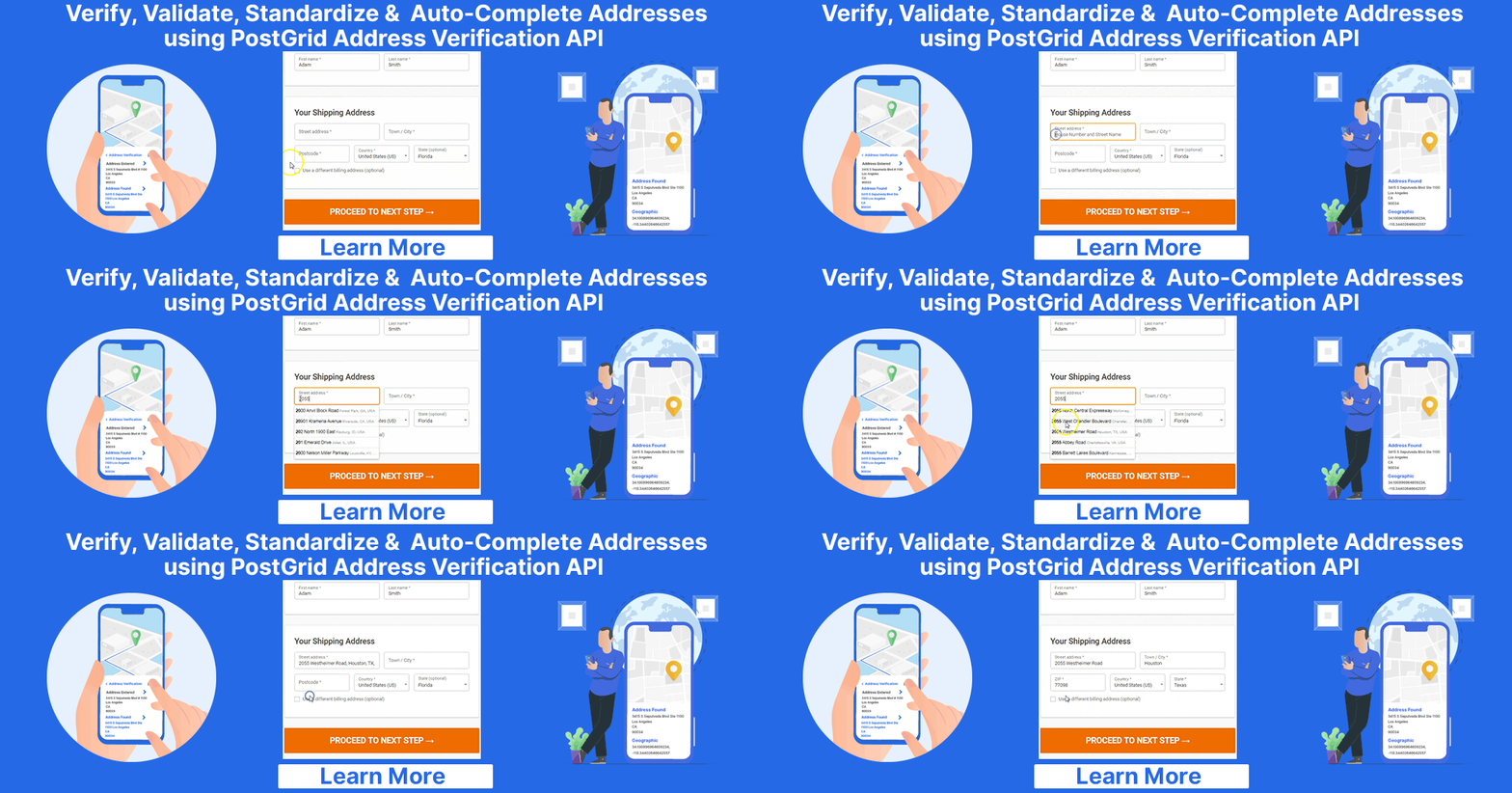
9. Verify and Clean Your Mailing Lists Before Every SendPatient databases get outdated quickly. People move, change their names after life events, and phone numbers get reassigned. If your mailing list is full of bad addresses, you are wasting money on pieces that never arrive. PostGrid’s built-in address verification tool checks and corrects addresses before your campaign goes out. This reduces mail returns, lowers your cost per delivered piece, and makes sure your patients actually receive what you are sending them. |
10. Include All the Ways Patients Can Reach YouIt sounds obvious, but a surprising number of medical direct mail pieces only include a phone number. Your patients have different preferences for how they want to get in touch with you. Some will call. Others will prefer to book online, send an email, or look you up on social media first. Make sure every piece includes your phone number, website URL, email address, physical location, and social media profiles where relevant. The easier you make it for a patient to reach you through their preferred channel, the more likely they are to follow through. |
11. Lead with Benefits, Not ServicesPatients do not come to a clinic for a service. They come because they want to feel better, avoid a health problem, or take care of something that has been worrying them. Your direct mail copy should speak directly to those motivations. Instead of saying “We offer extended hours,” say “We are open evenings so you can get the care you need without taking time off work.” Benefits-first writing is more persuasive, easier to read, and far more likely to prompt action. |
12. Use Public Holidays and Seasonal Moments as a Reason to Reach OutSeasonal and holiday-themed direct mail gives you a natural, non-pushy reason to show up in a patient’s mailbox. Victoria Day, Canada Day, the back-to-school period, and the holiday season are all perfect opportunities to send a meaningful piece. You can attach a limited-time offer, like a discounted consultation for new patients, or simply send a warm seasonal greeting to your existing patients. Either way, timely mail makes your practice feel more human and keeps you top of mind when the next appointment need arises. |
 Also Read: Best Direct Mail Marketing Companies
Is It Illegal to Send Medication Through the Mail?
Beyond marketing materials, many healthcare organizations also use direct mail to send documents and items like test reports, consent forms, discharge summaries, lab invoices, and physical health records. A common question that comes up in this context is whether it is legal to mail medication in Canada.
The short answer is yes, but with significant conditions. The Food and Drugs Act and the Controlled Drugs and Substances Act govern how medications can be shipped. You can only mail medication if your packaging, labelling, and contents comply fully with these regulations. This applies to prescription drugs, over-the-counter products, and controlled substances alike.
If you are in any doubt about whether a specific item can be mailed legally, consult with a healthcare compliance expert or legal advisor before proceeding. The rules are strict, and the consequences of getting it wrong can be serious.
How PostGrid’s Healthcare Direct Mail Services Help Canadian Organizations
Running a direct mail campaign in-house takes time, staff, and ongoing attention to logistics. For most clinics and health organizations, it is not the best use of their resources. PostGrid is a print and mail automation platform built to handle the entire process for you.
Full PIPEDA, SOC-2, and HIPAA Compliance
Patient data handling in Canada is governed by PIPEDA, and PostGrid is built to keep you fully compliant. All data is encrypted, securely stored, and processed according to the regulations that apply to your specific situation.
Complete Print and Mail Fulfillment
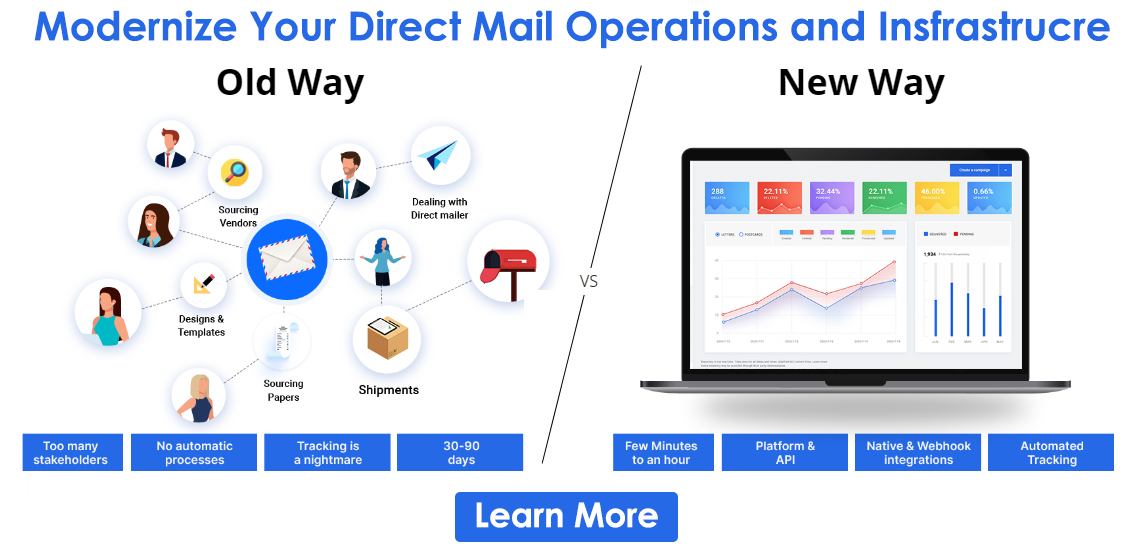
PostGrid handles everything from designing your mailers to shipping them through Canada Post. Your team does not need to print a single page, stuff a single envelope, or make a single post office trip. The entire workflow is automated and managed through your PostGrid account.
Real-Time Mail Tracking
Once your campaign is live, you can track the delivery status of every piece through your PostGrid dashboard. You always know where your mail is in the delivery process, which makes reporting and follow-up planning much easier.
Campaign Triggers and Automation
PostGrid integrates with your CRM or practice management software through an API or Zapier. Once connected, you can set up triggers so that mail goes out automatically when a patient books their first appointment, misses a scheduled visit, or hits a milestone in their care journey. You set the rules once, and the system handles the rest.
Address Verification
Every address in your campaign is verified before your mail goes out. This reduces wasted pieces, lowers your overall cost per delivered item, and makes sure the right piece reaches the right person every time.
Along with marketing items, most healthcare organizations also use medical direct mail to send other documents, like:
- Test reports
- Consent forms
- Discharge summaries
- Physical and mental health records
- Lab invoices, etc.
But are you allowed to send medication via post in the same way as marketing and transactional mail? The short answer is yes, but you need to follow several guidelines.
Also, you must know the Food and Drugs Act and the Controlled Drugs and Substances Act govern drugs. You can only ship medication if your packaging, labelling, and contents follow the applicable regulations.
Also Read: Bulk Or Mass Mail ServicesWrapping Up
Direct mail for healthcare providers is not going anywhere. In a world where patients are constantly bombarded with digital messages, a well-timed physical mail piece from a trusted provider stands out, gets read, and gets remembered. The key is to approach each campaign strategically by using targeted lists, personalized copy, clear calls to action, and the right timing.
Whether you are marketing to physicians, re-engaging lapsed patients, or welcoming new ones into your practice, the 12 best practices in this guide give you a strong foundation to build on. And with a tool like PostGrid handling the heavy lifting, running consistent, compliant, and effective direct mail campaigns in Canada has never been more accessible.
Sign up now to automate your first healthcare direct mail campaign.
Also Read: Healthcare Marketing TrendsFAQs
What Is Healthcare Direct Mail?
This type of direct mail is a marketing strategy where clinics, hospitals, pharmacies, dental offices, and other healthcare organizations send physical mail pieces directly to patients or physicians. It is used to book appointments, re-engage lapsed patients, promote services, and build long-term patient relationships.
How Do I Keep My Patient Mail Campaigns PIPEDA Compliant?
Use a direct mail platform built for healthcare compliance like PostGrid, covering PIPEDA, SOC-2, and HIPAA. This means your patient data is encrypted, securely stored, and only used for its intended purpose throughout the mailing process.
What Direct Mail format Works Best for Healthcare Providers?
Postcards work well for appointment reminders, seasonal campaigns, and new patient outreach because they are immediately readable without needing to open an envelope. Letters are better for confidential or detailed communications. Self-mailers and brochures work well for service announcements or educational content.