

How to Choose Paper for Printing Direct Mail Marketing Materials?
Direct mail marketing is gaining prominence in this digital-first world. Understanding how it boosts engagement and response rates, many businesses include them in their omnichannel marketing strategy. You might be focusing on balancing texts and design elements in a way that leaves a long-lasting impression. However, you overlook one crucial aspect equally responsible for readers’ perception of your direct mail piece and the business: the paper’s features.
The texture, coating, weight, thickness, and colour impact how the piece will look and feel. It will serve as an extension of your brand image. Upon holding the mail, the recipient will look at these aspects to decide whether they want to engage with your business. They will be different for every format. This blog will discuss how the paper’s features impact the efficacy of your direct mail campaign. You will also learn how to choose the paper for different formats.

Key Takeaways
- The different aspects of a paper, such as weight, texture, size, and colour, influence how the recipient will perceive your brand.
- The paper you choose should depend on the purpose of the mail. For instance, you should use heavier papers for high-value offers but lighter ones for mass outreach.
- Different direct mail formats have different feature requirements; brochures need to be thinner to be flexible, but business cards should be thicker so the recipient can keep them longer.
- With PostGrid, you can choose the paper you like, and it will automate the printing and mailing of self-mailers, business cards, postcards, and more.
Role of Paper Features in the Effectiveness of Direct Mail Marketing Campaigns
Paper Thickness and Weight
They are related but different concepts. Paper thickness is measured in thousands of an inch or points and refers to the actual physical dimension of the paper. One point equals 0.001 inch. The higher the point, the thicker the paper will be. On the other hand, paper weight refers to the weight of the quantity of the paper and is measured in pounds (lbs) or grams per square meter. It is associated with the density and strength of the paper.
Thicker and heavier paper gives the impression that the business is professional and offers high-quality products and services. It is also durable and resistant to damage. If you are offering something valuable and want the recipient to retain the piece for future use, go for thicker and heavier paper. However, if you aim to maximize the reach instead of offering a premium presentation, you can choose thin, lightweight paper.
Paper Size
Bigger mail pieces, such as oversized postcards, stand out in a mailbox and are harder to ignore. This increases the chance that the recipient will open and engage with them. You can use them to grab immediate attention to urgent communication, such as a special offer, an event, or a limited-period discount. If your goal is targeted marketing and networking, we advise using smaller formats, like regular-sized postcards or business cards. They are effective in conveying a concise message.
colour in Paper Selection
The colour of the paper can impact the recipient’s perception of your brand. If you use rich colours like blue, dark green, or jewel tones, your business will appear high-end. The recipient will think the mail piece is valuable and worth paying attention to. On the other hand, lighter or neutral colour papers are associated with simplicity and professionalism.
Paper colour can also impact readability. A high contrast between the paper colour and the text will make the content pop out and be easy to read. However, readers will have difficulty understanding if you use dark text on a dark background. This will frustrate them, and they might discard the direct mail piece.
If you want to enhance the impact of your message, we advise using colour psychology. Each colour invokes specific emotions. For instance, if you are an eco-friendly brand, use green paper, which signifies health, growth, and sustainability. If your direct mail contains an urgent offer, use red paper.
Texture and Coating
When the recipient holds the paper, its texture creates a sensory interaction, invoking a sense of luxury, which can increase engagement. Textures like felt paper reflect a sense of sophistication and attention to detail, and you can use them to spread awareness about an event. On the other hand, textures like recycled or rough-hewn paper convey eco-friendliness. If sustainability is a part of your business method, you can choose them to resonate with eco-conscious customers.
PostGrid uses recyclable paper to guarantee sustainable printing operations. Moreover, our Print & Mail API solutions come with a Forest Stewardship Council certificate, which means the papers on which we print your direct mail material are made responsibly.
Coating is another aspect of paper that impacts how your customers perceive your brand. In addition to their aesthetic appeal, coatings impact durability during transit. They ensure that the printed material arrives in perfect condition at the recipient’s door, enhancing engagement and retention. Below are some of the standard coatings and the impact they create.
- Matte: This provides a smooth, non-reflective surface that gives the direct mail a sophisticated look. Since there is no glare, text appears clearly, enhancing the readability. If your piece contains a lot of text, use paper with a matte coating.
- Glossy: They will make the colours vibrant and sharpen the images, giving the collateral a polished look. If you plan to add many visual elements like products, promotions, sales, or event invitations, the glossy coating will make it stand out.
- Satin or Silk: They fall between matte and gloss. It gives a luxurious smoothness to the paper without the shine. Choose this coating if you want your piece to provide a premium feel while maintaining readability.
Choosing the Right Paper for Various Direct Mail Marketing Collaterals
Business Cards
Business cards are a reflection of your brand, and they stay longer with the recipient. Choose a paper with the following qualities:
- Choose the standard size, 3.5’*2 “, to ensure your card easily fits in the customer’s pocket or holder.
- Its thickness should range about 350-400 GSM to balance durability and cost.
- Typically, people write something on the back, such as an appointment date. In this case, we recommend opting for a matte finish as it is easy to write on them.
- Avoid making your card colourful. White or off-white paper is the standard choice, as it ensures that the text and design are legible.
- To maintain the card’s professional look for a longer period of time, select paper with a scratch—and water-resistant coating or finish.
Postcards
Postcards are seen as a tool for quickly grabbing attention. Hence, it is important to choose features that make a great first impression.
- They are self-mailers, which means they will not be enclosed in an envelope. To ensure they can withstand the mailing process, go for heavier stock, somewhere between 18 pt and 20 pt. They will also work well for double-sided printing, as the thickness will prevent bleeding.
- To make your images and text look crisp and professional, choose paper with a higher brightness rating of 90-100.
- When mailing the postcards, make sure the size and thickness meet the United States Postal Service regulations. If you choose larger dimensions, the postage charges will increase.
Brochures
These are content-heavy pieces that recipients dedicate time to go through. They should be sturdy to convey quality while being flexible.
- Since brochures are typically mass-mailed, we suggest choosing an 120–170 GSM text weight to save money on mailing. This weight is also ideal for folded brochures, as it allows easy folding without cracking or showing creases.
- If you add interactive elements like pull tabs or coupons, use heavier text paperweight in the 148- 178 GSM range. However, use lighter cover stock paper between 120–170 GSM text weight if you want to add die cuts and perforation.
- They contain a mix of text and images, so opt for satin-coating paper. This will make it easier for the reader to navigate through the piece, and the images will shine sufficiently to stand out.
Catalogs
It is a saddle-stitched direct mail marketing piece with various paper types for the cover and interior pages; hence, the requirements vary accordingly.
- If you want to minimize the mailing cost, keep the cover stock thick and the text stock thin. However, make sure they match for consistent colour and image quality. For instance, if you use a 120 GSM text stock, ensure the cover stock is 67 GSM; otherwise, despite consistent colouring, there will be a difference between the cover and interior pages.
- If you are mailing the catalog, consider the total weight. We will advise using lighter interior paper to avoid paying a massive sum.
- Each interior paper should be coated differently, depending on its content. For instance, high-gloss-coated paper is used for pages with images, and uncoated paper is used for those with text.
Greeting Cards/Event Invitation Cards
These are impactful direct mail pieces to connect with your customers and prospects. Choose the one with the following features.
- Since the recipient will write on them, such as RSVP, use uncoated paper.
- The inner page should weigh between 133 and 148 GSM, and the cover paper should weigh between 148 and 192 GSM. This will give the document a premium look while ensuring the paper is sturdy enough not to be damaged during mailing.

Use PostGrid to Print and Mail High-Quality Direct Mail Marketing Materials
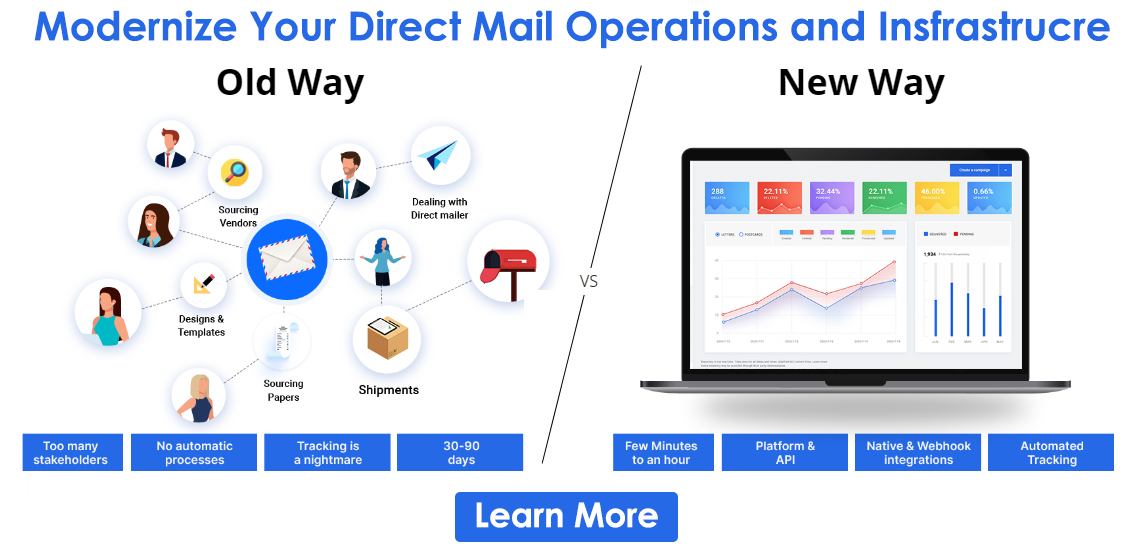
The paper you choose impacts how your audience will perceive your brand and interact with the message. The right combination of weight, texture, coating, and colour will make it engaging and effective. However, sourcing, printing, and mailing high-quality direct mail pieces can be time-consuming. This is where we can help. You just choose the features of the paper, like matte or glossy, and we will automate the entire process, saving you time while delivering impactful pieces. To learn more about how we can help, request a demo now.