
What is Plastics and Printing? How Can It Impact Your Business?
Businesses prefer printing various designs or text onto plastic surfaces to gain attention and build credibility. Plastic printing gains more attention due to its better tangibility and uniqueness. Businesses use this technique to print plastic cards, hang-tags, menus and brochures, and outdoor promotional materials. It requires high-quality printing equipment and inks to produce durable printed materials that withstand heat, sunlight, and humid conditions. However, you might encounter several challenges in plastic printing. This blog is the perfect place to learn about plastics and printing and how it can help your business.

Key Takeaways
- Businesses use plastic printing to print logos, product models, and other patterns or artworks.
- Plastic cards are ideal for renewal, membership, access, or data cards.
- Many restaurants & cafes use plastic menus and brochures to sustain environmental factors.
- Plastic is a durable, versatile, and easy-to-print material you could find.
- Each plastic type is sure to be durable and intended for use.
- Impurities, dust, dirt, and debris on plastic can severely impact printing.
- Use high-quality ink for plastic to ensure color accuracy, durability, and resistance to smudging.
- Laser, digital, screen, pad, UV litho printing, hot stamping, and flexographic printing are some of the most popular printing methods.
- The printing machine must be compatible with your plastic type and printing method.
- Businesses face multiple challenges while printing on plastics.
What is Printing on Plastic?
Plastic printing involves printing various designs or text onto plastic surfaces to improve visual appeal. It is becoming increasingly popular among businesses, and custom prints, including logos, product models, and other patterns or artworks, are applied using various techniques to plastic parts. This printing method attracts more attention than printing on paper due to its higher tangibility and uniqueness.
What are Some Popular Use Cases of Plastic Printing?
Plastic Cards
These plastic business cards are perfect if the recipient works near water or outdoors. They can easily withstand water and other environmental factors, which ordinary paper cards can’t. Businesses can use affordable plastic cards for renewal, membership, access, or data cards.
With magnetic strips, barcodes, and unique designs, advanced personalization is also possible. These cards give you new horizons for your marketing materials. Attach them with your direct mail or other printed materials to gain instant authority and attention. As a tangible centrepiece, plastic cards improve people’s perception of your brand. These cards are most commonly used in retail and finance businesses.
Hang-Tags
These tags are common marketing materials or parking badges on cars. They might also be found as door hangers or fridge magnets. Since the tags are exposed to the weather, we can’t use cheap materials. Try giving these plastic tags a matte finish as a protective coating to increase their longevity. It will reduce the impact of light fading the ink and give you a more prolonged brand presence.
Menus and Brochures
The food and beverage industry loves to use plastic paper to design menus and brochures. This waterproof and stain-resistant material can withstand the test of time and the environment without looking dingy or grubby. Some businesses also use synthetic paper to print brochures, maps, or field guides. Like regular paper, synthetic paper comes in different finishes and coatings, making your marketing materials more engaging.
Outdoor Plastics
These materials often use Styrene to provide the most durable marketing materials to sustain the message outdoors. It uses composited layers of plastic to make it thick and resistant to the environment. You can use them for outdoor promotional materials, lightbox signs, window cards, bus stop advertisements, etc. These plastics are suitable for any place that takes a heavy beating.

How to Print on Plastic?
Plastic is a durable, versatile, and easy-to-print material you could find. It could be perfect for marketing materials like business cards, brochures, and signs. However, businesses often find it challenging to start plastic printing with a proper process.
Select the Appropriate Plastic Type
Multiple types of plastic are available for printing jobs. Each type offers unquestionable durability and intended use. For example, polystyrene provides good impact resistance but poor solvent resistance. At the same time, polypropylene offers superior clarity for transparent products. We must consider our intended use and the thickness of plastic since they impact both the printing process and the end user. Printability and compatibility with your printing technology also matter significantly in plastic printing.
Prepare the Plastic for Printing
Any impurity, dust, grime, dirt, or debris can severely impact printing. Ensure the plastic is clean before starting the printing job. The plastic must also be free of water or oil residuals, as these elements could interfere with ink adhesion.
Use High-Quality Printing Equipment and Inks
Businesses planning to print on plastic cannot compromise with the printer and ink they use. You should only use printers for plastic substrates for the best adhesion and resolution. We don’t want any substandard printing job in our marketing materials that could degrade our credibility. Use the best possible ink for plastic to ensure colour accuracy, durability, and resistance to smudging or fading.
Preserve Your Print
Prints on plastic tend to fade and deteriorate over time. We recommend applying a UV coating if the printed material is exposed to sunlight. For example, signboards might need this coating to avoid fading or discoloration, but you won’t need such a coating for business cards. However, a moisture-resistant overcoat could help protect your prints under humid or wet conditions.
These steps are often necessary for vibrant, sharp, durable, and resistant materials to withstand any environment.
Popular Plastic Printing Methods You Can Consider
Laser Printing
It is a non-contact printing process that marks the design on a plastic surface using a laser. A laser printer relies on a focused laser beam to selectively melt a section of the plastic material to create the desired design or image. No physical contact between the plastic surface and the printer ensures lower material damage risks.
Laser printing provides high-quality prints with sharp and precise lines, ideal for intricate designs. It is also clean and environmentally friendly, producing less waste than other printing methods. However, the plastic material must be compatible with laser printing because the fuser unit may get extremely hot, and melting plastic sheets can be disastrous.
Digital Printing
Inkjet is the most common printing technology, producing high-quality prints on plastic surfaces. Digital printing doesn’t require traditional plates, reducing turnaround times and costs. Businesses have better flexibility for short and custom print runs.
You can create the designs using any mainstream software, such as Adobe Photoshop, Illustrator, or Canva. The designs are then printed with tiny droplets for a high-resolution and durable print. However, these inks are suitable for non-porous plastic to ensure lasting quality.
Screen Printing
Screen printing is a specialized process for transferring ink through a stencil or mesh screen onto a plastic substance. High-powered UV light is necessary to dry the ink for a durable print with bold and vibrant colours. Screen printing is often standard for printing substrates because specialized inks are highly suitable for plastic surfaces. Businesses can print products in large quantities rapidly and efficiently. The more you print, the cheaper the unit cost becomes.
Pad Printing
This technique helps transfer 2D images onto 3D objects. It uses a silicon pad to transfer from a laser-engraved (etched) printing plate to a three-dimensional object. Pad printing is commonly used on promotional bottles, rulers, and golf balls. It is suitable for objects of almost any shape or size. The results are highly resistant to fading, perfect for long-term use. To ensure even and consistent prints, we use flexible rubber to conform to the contours of the plastic surface.
UV Litho Printing
UV lithography is another digital printing method that uses ultraviolet light to cure inks and coatings on plastic materials. It suits high-quality printing applications such as packaging, labels, and product graphics. It produces quality images with fine details, and businesses like this technique because of its fast drying time.
UV Litho printing is used in the cosmetic, food, and pharmaceutical industries, where high-quality imagery and durability are necessary. This printing method is also popular for special effects, such as metallic finishes or embossed textures. It does not use solvents or other harmful chemicals, making it relatively environmentally friendly.
Hot Stamping
Hot stamping is also a quick and easy way to print on plastic bags. Heat and pressure are used to apply ink from foil to a plastic surface. You only need a hot stamp to imprint your design as you pass through the bags. This versatile printing technique can be used on various materials, including plastic, leather, paper, and fabrics.
These prints will also resist fading, scratching, and other types of wear and tear. Advanced methods also let you produce highly detailed designs with fine lines, text, and complex patterns. The quick printing time also makes it a highly affordable printing method.
Flexographic Printing
This relies on a flexible relief plate to print an image on a plastic surface. Businesses often prefer flexographic printing in bags, labels, and wrappers. You can produce high-quality images at high speeds with this method. Logos, graphics, and other pictures on plastic materials look more detailed and vibrant with flexo printing.
Instantly changing the printing plates makes it ideal for businesses that frequently change their packaging. Experts often call it the modern version of letterpress, a versatile printing method for plastic, metallic films, paper, etc.
Why is Selecting the Machine for Plastic Printing a Headache?
So many printing machines are available in the market, each with distinctive features and use cases. Businesses often find it challenging to find the perfect balance between speed, precision, and durability. Next, the type of printing process used to print designs and text on plastic surfaces is determined. Thermoforming, extrusion, and injection moulding are the most popular methods.
You must follow the requirements for each of these processes. The printing machine must be compatible with the type of plastic and printing method you will use. This sounds daunting, but it is the primary reason many businesses prefer consulting a third-party printing provider. These partners save you from the enormous initial investment and time-consuming preparation for the printing jobs. In-house printing requires many factors to consider to meet specific needs.
Types of Plastic Materials Suitable for Printing
- Polyvinyl Chloride (PVC) is a highly versatile material used in construction, credit cards, and medical devices. You can use plasticizers to make PVC.
- Polyethylene Terephthalate (PETE or PET) is commonly used in water and soda bottles, textiles, and food jars. PET is transparent, lightweight, robust, and has excellent barrier properties.
- High-Density Polyethylene (HDPE) is standard in detergent bottles, milk jugs, and plastic bags. It is a dense, strong, and resistant to solvents material.
- Low-density polyethylene (LDPE)) is softer and more flexible than HDPE, making it ideal for plastic bags and squeezable bottles. They are also resistant to bases, acids, and oils.
- Polypropylene (PP) is popular for its toughness, heat resistance, and flexibility. It is used in containers, automotive parts, and special fibres.
- Styrofoam/Polystyrene (PS) is commonly used in cutlery and packaging materials. Its comparatively thinner plastic material makes it useful for diverse applications.
- Miscellaneous Plastic Polymers include polyurethane, polycarbonate, and acrylic. They often have many uses, from foam seating to bulletproof windows.
Each type of plastic has distinctive characteristics that impact the printing process and turnaround time. They also need specific inks and techniques for the best adhesion and durability.
Challenges in Plastic Printing
Smooth Surfaces
Smooth surfaces on plastic make ink adhesion harder for businesses. If you don’t pay attention, your ink might smudge or smear.
Absorbent Plastics
Some plastic types are more absorbent than others. The ink you use might get soaked into the material, leading to fading. Uneven plastic surfaces make it difficult to achieve a consistent print.
Heat Sensitivity
Some plastics are sensitive to heat and might wrap or melt under high temperatures during printing. Therefore, it is vital to consider the appropriate plastic type and maintain the proper temperatures while printing.
How Can PostGrid Help You With Plastic Printing?
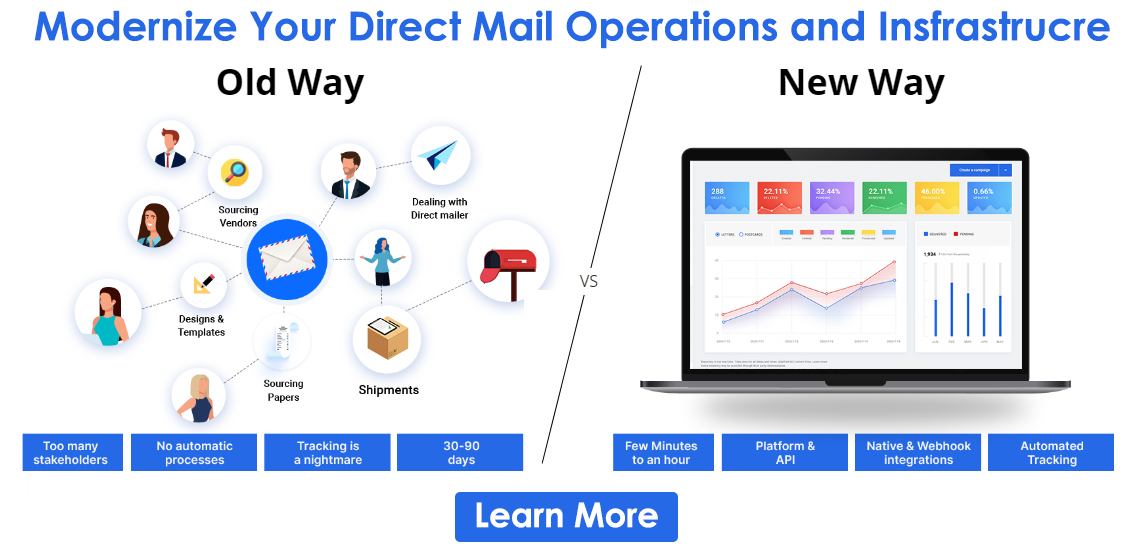
Businesses should consider outsourcing partners who can manage the printing and mailing of these plastic marketing materials. PostGrid’s Print & Mail solution makes it simple and faster for brands to send personalized plastic materials directly to customers. You can save time and effort by outsourcing everything from designing and printing to mailing the plastic collaterals.
We provide native integrations to automate the process and provide data-driven personalization in the printing process. It creates a lasting impression on your prospects and customers with high-quality plastic mailings. The 2 business day SLA ensures the printing process is faster and prepares your materials quickly.
Sign up now to print and send high-quality plastic marketing materials.