What Is A Non-Standard Address, And How does Standardization Help You Boost ROI?
How many times have you asked a friend for their address, and they began walking you through the process rather than just giving you the address straight?
You were probably trying to look up the address on Uber or Google Maps, but that friend has other plans for you. And the worst part is that, despite that friend’s good intentions, the directions rarely help.
You can notice the same effect when you use a non-standard address in your business communication. The addresses you get from your customers may look like directions or have typos or missing ZIP codes. While the data you have is correct in a way, it is not helpful because USPS only accepts standardized addresses.
It doesn’t matter how detailed a direction you have; it is not much use to you if it is not in USPS standard format. You could provide a whole map, but it still wouldn’t help you because USPS mail sorting equipment can not read a non-standard address.
Here we discuss what is a non-standard mailing address and how it can affect your various business operations. We also discuss the difference between standard and nonstandard addresses and how standardization can help you boost your business’s overall ROI.
What Is a Non-Standard Address?
The United States Postal Service (USPS) considers an address a non-standard address when it does not match any address in the USPS address database. Sometimes, it also goes by the name non-USPS address.
In other words, you could say that a non-standard address is an address that does not exist according to the USPS address database. Hence, any mail you send to a nonstandard USPS address is not deliverable.

What Is The Difference Between Standard And Non-Standard Addresses?
As discussed above what is a non-standard mailing address- But, we didn’t explain what a legal address is or when USPS considers an address standardized. A standard address is an address found in the USPS’s official address database.
You can also call a standard address complete for all practical purposes and include every address element for accurately delivering your business mail. The address elements in a normal address include the following.
- Validated street name
- Validated house number
- Directional abbreviations, such as E, S, W, NE, etc.
- Apartment/room number
- Validated city name (with two-letter abbreviation)
- ZIP Code
You can prevent your valuable customer address data from becoming a non-standard address if you have all the details in the list above. Let’s look at an example of a nonstandard and standard mailing address.
Standard Address Example
Jack Sparrow
1408 STANFORD AVE NE
WASHINGTON DC 55245-1007
Non-Standard Address Example
Jack Sparrow
13th corner Stanford
Washington
As you can see from the two examples above, the non-standard address sounds more like directions to a postal address than an address. Of course, this is not always the case. As a company that deals with countless mail addresses daily, we have come across all types of postal addresses.
Following is an extract from a meeting we had with our CEO, who provided some great non-standard addresses.
“Customers frequently provide incorrect addresses in internet forms. And not all of them happen by accident. Our objective is to eliminate the nonstandard addresses that are not deliverable. I’m not talking about the typical nonstandard addresses with typos or missing ZIP codes. We can easily standardize them using our address verification system. It is vital to eliminate addresses that can not be standardized or are impossible to deliver.”
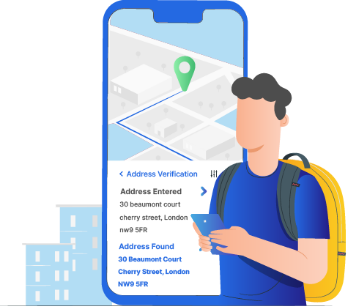
At PostGrid, our primary goal is to ensure that our clients can only access verified and deliverable addresses. Our address verification solution weeds out fake, undeliverable, or non-standard addresses. It provides maximum deliverability for your business mailers. Hence, it contributes to a higher ROI for your business’s marketing and communication efforts.
💡Also Read: How To Use CO In Mailing Address
Why Should You Correct Or Standardize Non-Standard Address?
There are numerous reasons your business organization should standardize a non-standard address. After all, why would you intentionally risk using insufficient data for your business operations? The only reasonable excuse not to standardize your addresses is to save money on third-party solutions.
However, are you saving money, or are you losing it? The following points can help you understand the implications of using a non-standard address for your business. It also shows you how you could lose more money and bring down your ROI by not standardizing your customer address database.
Minimize Duplicate Data
Duplicate data is one of the main concerns for any organization with an online presence. Why? Because duplicate address data can lead to poor-quality segmentation of your leads and customers.
It, in turn, can lead to various issues in your marketing and communication efforts and ROI. This alone is enough reason to avoid using a non-standard address for your business communication.
In a way, the duplicate data is like Fredo Corleone in The Godfather. Fredo is the seemingly harmless brother in the movie who eventually ends up betraying his family and brother.
Similarly, duplicate data may seem harmless at first. Still, it can bring down your whole business operation if you leave it unchecked. And the best solution to avoid this is to standardize your non-standard address.
Save On Mailing Costs
Someone with experience with direct mail communications would know that shipping costs often run wild if you don’t keep a check on them. Any errors in mailing could lead to the reshipping of items. All this can lead to additional expenditures for your business organization.
And the root cause for all this?
Yes, you guessed it right! It’s a non-standard address.
And the worst part is not the money you lose but the time. For example, consider direct mail for healthcare. Healthcare organizations send all sorts of marketing and communication mail to their patients.
It includes time-sensitive documents like patient billing statements, medical collection letters, etc. Imagine the trouble a healthcare organization has to go through just because of a non-standard address.
Furthermore, standardizing your addresses and sending mail in bulk also qualifies you for special discounts from the postal service. As a result, you save money and, more importantly, time for your business operations by standardizing a non-standard address.
Reduce Fraud
Do you remember the movie Face/Off, with John Travolta and Nicolas Cage? Nicolas Cage uses Travolta’s face (literally) and his identity in the movie. It is a lot easier to do the same in the online world.
Manufacturing or switching information is easy for hackers and cybercriminals. Standardizing a non-standard address involves verifying the same with the USPS’s master database.
Hence, using an address verification tool like PostGrid allows you to reduce fraud. This ability can be handy for every organization regardless of the industry vertical. But, it is beneficial for organizations in the healthcare industry. Here are some ways PostGrid’s HIPAA-compliant address verification tool helps our clients in the healthcare industry.
- Confirm patient identity (HIPAA requirements)
- Protect PHI
- Avoid medical identity theft
- Remote onboarding and registration of patients
Also Read: How Canada Postal Services Work?

Conclusion
Having a non-standard address in your address database may initially seem harmless. However, as the number of nonstandard addresses increases, it becomes increasingly challenging to run various business operations efficiently. Eventually, it eats into your profits and brings down your overall ROI.
Hence, business organizations must invest in a robust address verification solution like PostGrid. Doing so helps you ensure superior quality of communication and provides you with advanced features necessary for the smooth running of your business.
Ultimately, investing in a tool like PostGrid enables you to save money and boost your company’s overall ROI. It not only helps you with standardizing your non-standard address but also helps your streamline your marketing and communication efforts.