
Beyond Emails: How Physical Mail Rekindles Customer Trust in a Digital-Only Era
In the era of overcrowded inboxes with daily offers and short-lived social advertisements, earnestness may be deafening. Yet, ironically, one of the most questionable moves for brands to restore authenticity is to reach for an envelope rather than a click.
Physical mail, letters, postcards, and dimensional packages can do something digital communications have difficulty doing: they tangibly bridge the distance between brand and customer, offering trust where “just another email” is easy to dismiss.
(Yes, right after you’ve scanned your inbox, you might second-guess: are we still doing mail? But stay with me.) To illustrate how trust gets rebuilt through tactile touchpoints, we’ll explore surprising psychology and how this model even plays in industries as friction-filled as finance and compliance-heavy sectors.
Key Takeaways
- Physical mail isn’t dead; it’s rare. Uniqueness is precious for raising people’s trust.
- Hybrid wins over binary. Combine digital precision with tangible assurance.
- Perfect for financial services. When confidence is an asset, a letter can be stronger than a link.
- Automation scales authenticity. Use the instruments to send personalized mail at digital speed.
- Always measure. Every envelope is data, track, test, optimize.
Why Physical Mail Matters When Digital Feels Hollow
The Tangibility Gap: Our Mind Interacts With Real Objects
People are constructed to deal with objects, not pixels. Research conducted by Barnes and Noble revealed that books read in print provide a higher level of understanding.
In marketing, the same principle applies:
- A mailer that is well done needs more attention
- It lingers longer
- It signals genuine effort
Digital messages, in contrast, are swiped, scrolled, or trashed with a flick.
When a brand mails you something, it breaks through the distraction barrier. Even subconsciously, your brain nudges, “Something physical arrived, someone took time, someone cared.”
That feeling of tactile impressions is essential even in digital-first industries. Take a look at how people hesitate when they first decide to sell bitcoin or move funds online; there’s an invisible trust gap. Physical mail, by contrast, triggers a different part of the brain: it feels real and grounded in effort. That impression can convert the conceptual transactions into something that feels secure.
Authority and Risk Perception
In delicate sectors, such as financial services and cryptocurrency, credibility is everything. Digital-only interactions often raise skepticism: “Is this a phishing email? A spam account?”
A piece of mail, complete with a real address and stamps, says: “We exist in real life, too.”
As noted in research on direct mail visibility and reliability, physical mailers “are more visible and reliable than marketing emails,” and combining them with digital outreach can “reinforce brand recognition and trust.”
The Scarcity and Novelty Effect
With most brands abandoning physical outreach, any real mail now stands out. It becomes memorable. This rarity creates emotional weight.
According to insights on why fewer brands use direct mail today, your mailed piece now has a far greater chance of getting noticed.
Physical Mail in the Age of Financial Services and Crypto
You might think: “Great, I can send postcards to sell shoes. But what about regulated products, crypto, or financial services?”
Here’s where the miracle begins: marrying physical trust signals with digital convenience.
Building Trust in Crypto-Finance
Consider a user deciding whether to use Paybis (a platform that lets users trade cryptocurrency).
- On the one hand, all transactions happen online
- On the other hand, users worry about legitimacy
Paybis has built credibility through licensing.
Now, pretend scaling up that trust offline:
- A welcome booklet sent via mail.
- A branded postcard verifying, “Your account is live, here’s how to start things safe.”
- A “verification kit”
That physical anchor adds one more level of confidence to an otherwise abstract process.
In the scope of selling Bitcoin, some users shy away because they fear scams. An email link saying “sell bitcoin here” may trigger hesitation. But a physical mailer with a secure QR code or unique verification number that drives to a verified Paybis landing page informs about its legality. It’s the best of both worlds, digital convenience supported by physical assurance.
The tax and regulatory regulations are complex and require Canadian crypto investors to grapple with them. According to the Ottawa Life article, the profit derived from selling Bitcoin is subject to taxation, and websites such as Paybis facilitate users with transaction statements, which makes compliance easier.
A mailed confirmation or “end-of-year summary” could complement digital statements.
Information Safety
Some consumers are not comfortable with sensitive financial or identity transactions being made wholly online. By mailing them a physical reminder that they have not done their KYC yet, with the message, Your KYC is pending, please upload documents, scan this QR code to proceed, you have moved a barrier of trust offline.
In regulated sectors, physical mail can double as a compliance tool:
- Proof of disclosure
- Signed paper opt-in forms
- Mailed disclaimers that meet legal conditions
This tangible documentation reassures regulators and clients alike.
How to Use Physical Mail as a Trust-Building Lever
Switching from digital-only to a hybrid (digital + physical) approach requires a clear strategy.
1. Segment and individualize. Not all customers need mail. Focus on high-risk or high-value segments, new users, those under compliance review, or dormant accounts.
2. Tie to a digital trigger:
- After account creation, send a welcome letter with a QR code for verification
- After a large trade, mail a thank-you card
- At year-end, mail a physical tax summary
Automation tools now make it easy to trigger direct mail directly from online actions, ensuring messages get to the proper user at the right moment.
3. Keep it dynamic:
- Use QR codes
- Add embossed seals or metallic foil for tactile quality
- Make the experience something worth opening
4. Use the post as community evidence. Include compliance logos. Physical seals calm digital skeptics.
5. Adjusting performance. Track which codes or mailers convert. Run A/B tests, postcard vs. envelope vs. dimensional box, and adjust design and delivery timing. Use real-time campaign analytics for clarification of every detail.
6. Blend with email and SMS (omnichannel). Get to the point: “Did you get our letter? Tap the QR code below to complete your setup.” The most effective method of attention capture is physical mail, and the most effective method of closing the loop is through digital follow-ups.
Three Real-World Case Scenarios (In Addition to Retail)
Financial Advisors and Wealth Platforms
Customers who are very rich require prestige. “A quarterly outlook or performance report printed and sent to the clients says: We are stable. We’re real.”
Mortgage and Banking
During mortgage applications, applicants dread unanswered emails. Sending a “next-step” packet, forms, a checklist, or even a branded pen reduces anxiety. Insurance renewals in print are also harder to ignore than digital notices.
Subscription Services and Memberships
A physical onboarding kit is not likely to be contained in any non-box service (a SaaS platform). A plain postcard, a magnet, or a welcome card can be used to make sign-ups an event.
Possible Pitfalls and Mitigations
Even strong strategies can stumble without planning. Here’s a quick reference table.
| Challenge | Mitigation |
| High printing cost | Automate mail; focus on high-value users |
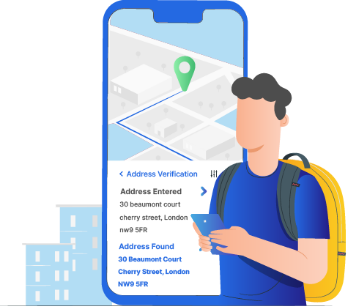
| Address inaccuracy | Use address verification (PostGrid API) |
| Delivery delays | Track and batch utilizing analytics instruments |
| Compliance risks | Add printed disclaimers and consent forms |
| Sustainability concerns | Use recycled paper; include eco-messages |
For detailed information about cost-efficient small business mail and compliance practices, learn how platforms streamline budgets.
Final thoughts
The physical mail will remind them that you are not in an information age where people are on the screen and no one believes in slick applications. It is not nostalgia but a trust strategy. Physical letters slow down the credibility of the scroll and add weight.
Finance and compliance, Mail is not a dinosaur in risk-based industries. It’s a differentiator. The next moment you feel like putting up another glamour marketing campaign, stop and think, and ask yourself: Can this be a stronger message on paper?
The most innovative thing that a brand can do is to write a letter.