
How to Use an Effective HIPAA Breach Notification Letter Template to Notify Affected People?
Did you know 133 million records were stolen, exposed, lost, or disclosed in 2023? It broke all previous records as 2022 saw 51.9 million breached records, and 2021 saw 45.9 million leaked databases. As you can see, the figure has doubled, raising security concerns.
HIPAA is a law to protect personal data in the U.S. and if you are a business having global trade in the U.S. or you sell to U.S. citizens, knowing what HIPAA is can be helpful. Learning to draft a HIPAA data breach notification letter template has become highly significant! Since there is a specified timeframe within which organizations must notify victims of the data leak, it allows you to keep a sample handy to customize and send.
However, how do you know if you must send a data breach letter? Are you a HIPAA-covered entity? Which channels can you use to notify your target audience? Let us answer these questions in this blog!
Who Comes Under the HIPAA Breach Notification Rule?
The Rule applies to you if:
- You sell personal health records (PHRs)
- You are related to PHRs in some way
- You provide services for a company that sells PHRs or is related to them
Vendors
A vendor of personal health records is a company that either provides or manages electronic records containing someone’s health information. This information comes from different places, and individuals control it themselves. They must use the HIPAA breach notification letter template after every leak, threatening people’s safety and financial security.
Here’s an easier way to explain it: If you create a health app that gathers data from users and can connect with their fitness trackers, you’re likely considered a vendor of personal health records. However, you are not a vendor if your firm falls under HIPAA guidelines from the beginning.
PHR-Related Entity
Your company is a PHR-related entity if it works with a vendor that deals with personal health records. You could sell items on the vendor’s website even if it’s HIPAA-protected. Using or sharing information with personal health records also falls in this category.
For example, a company that sells fitness trackers is likely connected to personal health records if it sends data to health apps (often referred to as personal health records, as discussed earlier). However, if your company is already following HIPAA rules, then HIPAA does not consider it related to personal health records.
Third-Party Service Provider
Your company is a third-party service provider and must send a data breach letter (whenever needed) if it offers services like handling, sharing, or getting rid of health information for vendors that deal with personal health records or related companies. For instance, if a company that sells personal health records hires your business to handle billing, collect debts, or store health data, you’re a third-party service provider and must follow the Rule.
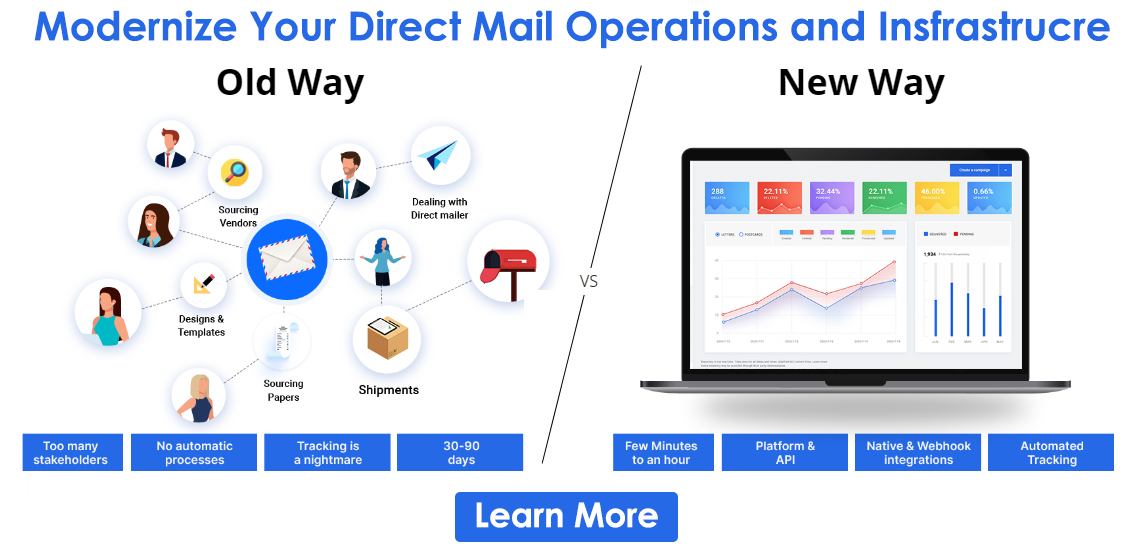
We understand it is impossible to print thousands of letters on your office printer to send data breach notifications. Hence, you can turn to automated direct mail solutions like PostGrid to design, print, and ship your messages wherever you need.
PostGrid’s API enables you to take a backseat on finding vendors or handling logistics. It manages it all online, saving you time, effort, and money. Thus, you can focus on the discovery of the breach and reinstate compliance instead of worrying about how to send a data breach notification letter to victims.
Top Data Breach Notification Letter Sample
State of Texas
The Public City Hospital
Department of Patient Health Information Security
592 Albany Springs LN, NE Houston, TX 77044
Date: April 10, 2024
Re: HIPAA Data Breach Notification Letter to Alert Patients and Minimize Effects – Substitute Service
HIPAA (The Health Insurance Portability and Accountability Act) requires organizations to notify clients whenever their health or other records are leaked. It primarily aims to secure people’s PHI, or protected health information, and extends to every detail, including the person’s name. We write this letter because our department noticed a data breach on April 4, 2024, affecting the patients of The Public City Hospital, Texas. We promptly notified approximately 2,010 affected individuals and families as per the law.
However, we received approximately 300 notification letters from the Post Office as undeliverable. This letter is a substitute service for the patients we tried to connect with earlier via postal services, but failed.
The Public City Hospital regrets to inform you that your private health data has been compromised. An authorized person likely has your details, which we tried to secure and keep confidential. One of our staff members sent a folder containing your PHI to an incorrect delivery address. The following day, we encountered a system error, likely caused by a potential hack of our HMS systems. We are looking into it to understand the source and stop further leakage.
The staff member reported the incident to our department the same day. We are still determining how much damage is preventable at the moment. Since the HIPAA Privacy Rule applies to all programs currently serving our patients, we are required to notify you of a security breach under 45 CFR 164.404.
Please note that the following items might have been underexposed:
- Your full name.
- The Public City Hospital’s medical record details.
- Date of birth.
- Admission date at The Public City Hospital.
- Infection diagnosis.
- Prescribed medication.
We apologize for the current circumstances under which we write this data breach letter, and understand that you have concerns. Please note that we take patient security and data confidentiality seriously and execute various safety measures. We try hard to regain your trust, including securing your PHI from unauthorized usage.
Here are some crucial details about the incident:
A staff member from The Public City Hospital wanted to share a folder with patient data with the medical coordinator, who requested the details. They required the folder to create disease prevention strategies and new approaches to patient admission and care at the hospital. When sharing the sheet, our staff member accidentally wrote an invalid mailing address on the envelope, redirecting the mailpiece to unknown and unauthorized personnel instead of the medical coordinator’s office at our other branch in Dallas.
We contacted the person staying at the address, who handed us the mailpiece. At cross-checking, we determined that the entire folder was intact, not indicating any breach. However, someone broke into our HMS systems the following day, raising concerns. We have started a complete investigation into the same.
Also, we have mandated our staff to undergo training and astute supervision when managing and sharing confidential patient information. The Public City Hospital has implemented many new procedures in the past week to restrict PHI access to personnel and maintain high data security levels. We strive to keep your data safe and prevent this incident from repeating.
Once again, we apologize for the inconvenience and regret upsetting you.
What You Must Do Now:
We believe the compromised PHI is inadequate for an unauthorized person or fraudster to steal our patients’ identities or commit financial fraud. However, we understand you might want to take preventive actions to stop any potential losses. You can visit the State of Texas website and check the HIPAA breach page for privacy and identity theft. Also, we will keep you in the loop as we get more details about the data hack affecting your PHI.
Please contact our office if you have any questions or if we can assist you in any way.
Sincerely,
Jake Halson
The Public City Hospital
592 Albany Springs LN,
NE Houston, TX 77044
Ph: 281-123-123. Toll-free number: 281-100-100
Email: jake.halson@tpchospital.com
Steps to Take Whenever a Breach Occurs
If your company sells personal health records or is related to them and there’s a security problem, the Rule tells you what to do next. You have to:
- Tell every affected person who lives in the United States
- Inform the Federal Trade Commission by filling out a form
- Sometimes, you might need to tell the media
People
If there’s a leak of unprotected personal health info, you must send a data breach notification letter to each affected person as soon as possible and at least within 60 days of finding out about the leak. The clock starts ticking from the day someone in your company knows about it or should’ve known.
Even though the Rule gives you 60 days to notify people, you should do it as soon as possible. For example, if a company finds out about a breach and collects all the needed details within 30 days, waiting until the 60th day to tell the affected people wouldn’t make sense.
The FTC
The Rule says you have to send a data breach letter to the FTC using a specific form, but when you do, it depends on the size of the breach. HIPAA requires you to take different steps when such a breach is discovered.
If the leak affects 500 or more individuals, you have to tell the FTC at the earliest, and within ten business days after finding out about it. You should use a specific form to report the leak to the agency.
You have longer to act if the leak affects less than 500 people. You need to send the same form to the FTC, along with forms for any other less significant leaks that happened in the same year, within 60 days after the end of the year.
If your company has one leak in April affecting 100 people and another in September affecting 50 people, you start counting the 60 days from January 1st of the upcoming year.
The Media
When a breach affects at least 500 people in a state, the District of Columbia, or a U.S. territory, things get more serious. You must use a sample data breach notification letter to inform local big media outlets as soon as possible and within 60 days after discovering the breach. This media alert is extra to the individual notices you must give to the affected people. It doesn’t replace those individual notices.
If your company helps another company that deals with personal health records, you also have to follow the Rule’s notification rules. First, your clients must tell you if they follow the Rule. If there’s a breach, you can tell a specific person in your contract with your client—or if there’s no specific person, a senior person in the company—at the earliest, and within 60 days of finding out about the breach.
You have to determine who might be affected by the breach and let your client know. Just sending the data breach notification letter isn’t enough; you should ensure they got it. Then, your client has to tell the affected people, the FTC, and sometimes the media.
Final Thoughts
A HIPAA breach notification letter template allows HIPAA-covered entities to notify their affected individuals about the breach at the earliest. Instead of wasting time finding samples and gathering resources, they can use the breach notification letter example to complete the task.
Please note that you must follow all regulations around the delivery of the breach notification, adding relevant details, being available to reply to the victims, and more! We hope the samples or examples in this blog can help you lay the foundation for how you can write notifications.
Also, you can leverage our direct mail API to prepare and send your notifications without hassles and at low prices. Contact us now for additional information on how to ship a data breach notification letter with PostGrid!