
Adapting to Customer Communication Preferences With Direct Mail Automation
A study by Hubtype indicates that 7 in 10 businesses believe they communicate effectively with customers. However, only 2 out of 10 customers agree with them. The communication gap between brands and consumers is growing even wider.
People are more dependent on different technologies for their professional, social, and recreational needs. Digital dependence has also increased consumer expectations for flexibility, personalization, and convenience.
However, you must realize the increase in customer touchpoints also opens the doors for new opportunities. Customers now view automation less as a novelty, and more as a necessity to get help for their issues. This blog will explain how direct mail automation can adapt through changing customer communication preferences.

Key Takeaways
- Personalization is vital to meet customer communication preferences.
- Each demographic prefers different communication channels.
- Direct mail automation creates multiple customer touchpoints for a brand.
- Automation is less of a novelty and more of a necessity.
- Automated triggers open new doors for engagement with direct mail.
- Integrated campaigns have a higher impact than standalone ones.
How COVID-19 Influenced Consumer Communication Preferences
The pandemic led to a significant shift in communication channel usage. Customers are rapidly moving towards digital channels. A report by Forrester claims that phone calls were the most preferred channel for customer support. However, people are moving more towards email, SMS, and direct mail for communication.
The Growing Demand for Personalization
According to a report by McKinsey, around 76% of consumers believe receiving personalized communication was a major priority while considering a brand. Another 78% say that customized content makes them return to a brand. But why is personalized communication gaining so much importance among consumers?
- They don’t like to feel like interacting with a bot or machine.
- Personalization considers personal information and previous behaviours.
- People are only interested in relevant messages.
Using Direct Mail Automation to Improve Customer Communication
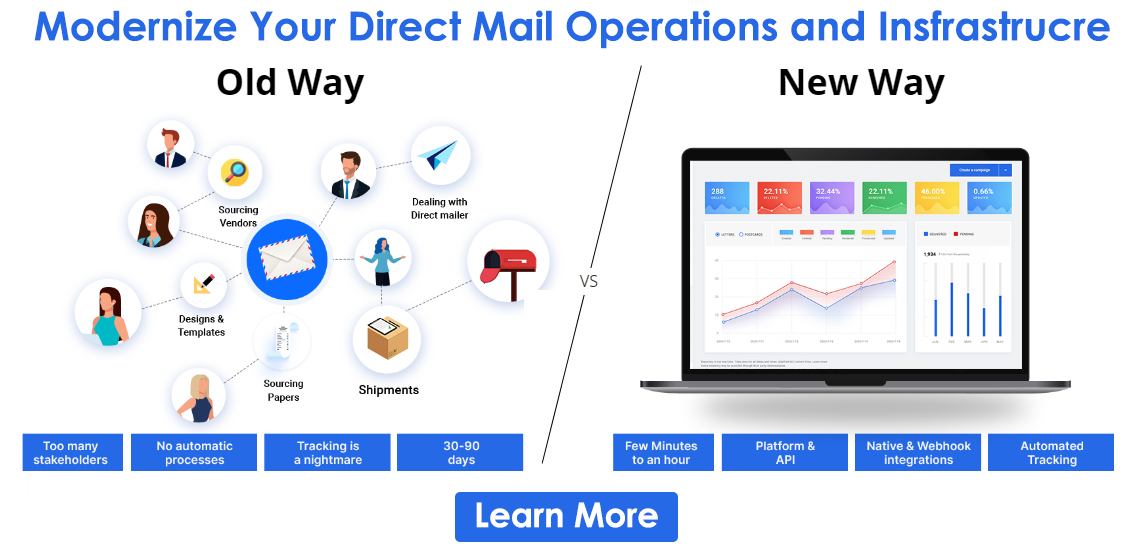
Direct mail automation is the replacement of cumbersome and time-consuming traditional direct mail. It gives businesses more control over their campaigns with automation tools and reduces manual intervention.
According to the Direct Marketing Association, the average ROI for direct mail campaigns is 29%. You can even exceed this ROI number by using automated campaigns and custom triggers.
Automated Triggers You Can Configure for Action-Driven Mailers
These triggers make your customer communication and marketing efforts stronger. You can use them to send mailers on unique opportunities during a customer’s lifecycle.
USPS Customer & Market Insights states that 50% of customers try something new within six months after receiving a direct mailer and two-thirds of customers receive their mail upon its delivery. It shows the true potential of sending automated mailers to create different touchpoints.
What triggers can you create?
1. Cart-Abandonment Trigger
Use this trigger to re-engage customers who have left items in their shopping cart and left without making a purchase. You need CRM integration to monitor cart abandonments and trigger a mailpiece with an exclusive offer to encourage them to revisit the cart and complete the purchase.
Around 65% of online shoppers tend to abandon their carts. It is a great opportunity to use custom triggers to send relevant mailers.
2. New Customer Trigger
A new customer is often clueless about the brand. It is the perfect time to build a strong emotional connection by setting up a custom trigger to send mail. The content could be anything from a thank-you note to a signed letter. Direct mail feels more personal and memorable than digital communication.
You can do something like Verizon. They send personalized letters whenever a customer signs up for a device protection plan.
3. Renewal-Reminder Trigger
It is 5 to 25 times more expensive to bring in a new customer than to retain an existing one. Set up a renewal reminder from your CRM to send a personalized letter or postcard to encourage a customer to renew a subscription plan. The triggered mail should:
- Appreciate their loyalty
- Highlight the benefit of continued service
- Provide a discount for the next purchase
4. Website Visitor Trigger
The analytics panel of your website can provide some useful insights about visitors’ intent and interest. Set up custom triggers for visitors who are interacting a lot but not making any purchases. These visitors are most likely to engage with your business. Send a postcard with a custom coupon code for their first purchase.
5. Life Event Trigger
Birthdays, marriage anniversaries, or customer milestones are the best ideas for direct mail triggers. They feel much appreciated and valued instead of being only a name on your customer list. You can send a letter or postcard with:
- “Congratulations” greeting with an exclusive gift card.
- Personalized message highlighting a unique product or service.
Check this example where GAP, the clothing store, provides a 25% discount to its recipient celebrating their birthday.
6. Product Review or Feedback Trigger
You can request feedback after a certain period following a purchase. This trigger will automatically send a survey or feedback form to gather insights and keep the customer in the feedback loop.
85% of small and medium-sized businesses say customer feedback has been useful for their brand. Your customers might ignore digital forms, but it is hard to ignore physical mail due to its tangibility.
7. Seasonal/Holiday Campaign Trigger
Holidays are the best time to expect strong sales. In fact, retail sales reached a whopping 957.3 billion U.S. dollars in 2023. You can send a custom trigger to send mailers during the holidays and capitalize on seasonal buying trends. Businesses should focus on sending timely and relevant promotions. Even broadband providers like Wave take full advantage of a Black Friday offer with self-mailers.
Direct Mail is a Tangible Channel for All Age Groups
Both direct mail and digital campaigns resonate with specific audiences and bring results for marketers and businesses. However, it is essential to know how to customize direct mail campaigns by age group. How will you fulfil different communication preferences of different age groups? Marketers have access to four generations of consumers:
- Boomers (Born 1946-1964)
- Gen X (Born 1965-1960)
- Millennials (Born 1981-1996)
- Gen Z (Born 1997-2012)
Each group has distinctive preferences for how they want to receive and respond to direct mailers.
Customizing Direct Mail Campaigns by Age
Communicating With Boomers
This group is currently aged between 59 to 77 years. According to Pew Research Center data, most of the oldest boomers (77) are still working and only 18% are fully retired.
Even though 85% of the boomer population has access to the internet, more than 50% of them still prefer to read offers and communication in direct mailpieces instead of email.
70% of this population also says direct mail feels more personal and interactive than electronic communication. It would be best to avoid promoting your products or services to apps or digital communication to boomers.
Generational insights to help your campaigns:
- Boomers are less likely than other generations to focus on design elements in mailpieces. They would focus more on the content or promotional offer. You can save time and resources on the design if you’re targeting boomers.
- The boomer generation is 22% more likely to find information about new products and services via catalogues.
- Boomers care more about sustainability practices and recycling-23% more than other generations combined. It means you should put effort into using FSB-approved paper for your campaigns.
Communicating With Gen X
This generation is aged between 43 to 58 years. The U.S. population comprises more than 19% of Gen X. They are more acquainted with digital platforms than boomers and spend most of their time watching videos on YouTube and other platforms.
It could be a great opportunity to include QR codes and Personalized URLs (PURLs) in your mailpieces and drive them to custom web pages.
Like the previous generation, 71% of Gen Xers prefer direct mail over email due to their personal experience, according to the USPS survey.
Generational insights:
- This generation is more likely to check promotional direct mail than marketing emails.
- They show limited interest in checking deals on apps or text messages.
- They believe emails from businesses are too frequent and intimidating.
- They often delete or send emails to the spam folder.
It is much harder to reach Gen X through traditional broadcast media. Direct mail is more sensible for engaging them. We recommend creating mailpieces with:
- Simple messaging
- Eye-catching colours
- Unique shapes
- Interactive elements (QR codes and PURLs)
Communicating With Millennials
Millennials are aged between 27 to 42 years of age. They make up nearly 22% of the U.S. population or around 72 million Americans. Nearly 100% of millennials are active on the internet. It could be harder to target this group’s audience with traditional direct mail.
You need to implement automation and data-driven personalization to reach them.
Generational insights from the USPS survey:
- 49% of millennials prefer email communication, while 32% like to stick with direct mail to receive promotions.
- This generation is likely to prefer app-based communication (8%) than other generations.
- They show the highest interest in interactive elements like QR codes, Augmented Reality (AR), and custom URLs.
Direct mail could supplement other channels instead of acting as a standalone channel for this generation. However, millennials are still somewhat inclined towards direct mail for these reasons:
- Physical mailers feel more secure than digital communication.
- Provides useful information without the clutter.
However, you should consider that they have short attention spans like Gen Z. Make your messages concise with short sentences and bullet points.
Communicating With Gen Z
This population is currently aged between 11 to 26. 45% of Gen Z prefer engaging with a brand with a transparent and trustworthy image. You should focus on sharing your brand’s story and company values via direct mail to this generation.
Generational insights:
- Gen Z has the shortest attention span out of all generations. It is vital to use concise messaging with relevant images.
- Around 81% prefer receiving personalized communications. Use dynamic content to personalize each mail piece with relevant content.
Despite the huge preference for digital channels, direct mailers have a novelty factor among Gen Z. Use the creative appeal by giving a personalized and tangible experience that digital communications can’t provide.
Interactive elements like QR codes and PURLs will play a major role in driving traffic to your online channels.
Direct Mail Fueling Your Omnichannel Marketing Efforts
Omnichannel marketing is the key to creating multiple touchpoints in the customer journey. 72% of marketers prefer integrating direct mail with email. Even USPS highlights how direct mail and digital marketing strategies work best when they are used together.
Direct Mail Automation and the Integrated Campaign
Websites
You need to ensure the branding is consistent across both the direct mailer and the website. As per USPS, 43% of people who saw a URL or QR on mailers visited the brand’s website. 31% of them bought a product or signed up for a service.
A direct mail automation platform lets you track and measure these codes and URLs for response and ROI data. These data points are incredibly valuable to marketers for analytics.
Email Communication
Emails can also be timed with direct mailers. You can send an email for a communication or promotion before the mailer makes its way to the recipient’s mailbox. For example, USPS Informed Delivery® sends recipients a digital image of the mailer before it’s delivered.
Social Media
Businesses can launch highly targeted paid social media ads after the recipients receive the mailpieces. USPS Informed Visibility® is an ideal service to get notified when the mailers reach their target audience.
Use an automated platform with integrations to trigger your social media ads. The recipients will get complimentary paid social media ads at the perfect moment.
SMS Marketing
Text messages often provide high open rates and customer engagement. You can use this channel to trigger personalized direct mail to fulfil the tastes and preferences of the recipient. Texts aren’t the best way to introduce yourself to the consumer. A physical mailer would be much more engaging for the initial contact.
How PostGrid Transforms Your Customer Communication Strategy
Customer communication preferences depend on how well you understand their demographics and ongoing efforts to create multiple touchpoints. Direct mail automation connects with customers who are intimidated by the digital influx.
Businesses should prefer a reliable direct mail automation solution like PostGrid to create automated workflows for consistent communication across all channels. It provides native integrations to define custom workflows for targeted reach and hyper-personalization of individual mailpieces. Interested in transforming your offline customer communication? Talk to our sales team and learn how PostGrid’s Direct Mail Automation solution can help you achieve seamless and personalized outreach.