
The Future of Accounts Payable: How Automation and Direct Mail are Driving Efficiency
What is the future of the Accounts Playable industry? Well, companies in every industry are under constant pressure to do more with less capital. It means their financial management process must ensure growth, streamline processes, reduce costs, improve service levels, and seize new investment opportunities. Top professionals and C-level executives know how to save 50% of their time spent on accounts payable tasks with automation.
Similarly, 96% of business leaders believe effective communication is a fundamental necessity to a work environment, suggesting that they value multiple communication channels.
Neglecting AP can dissolve supplier goodwill, leading to slower delivery times, less willingness to fix malfunctions, and slower response to queries. Paying early can provide significant benefits in situations where suppliers provide discounts or rebates for early payments.
However, around 43% of businesses pay late due to lost or missing invoices. It takes $13.04 on average to process a single invoice in the US. Plus, businesses take an average of 45 days to process an invoice in a traditional environment.
Businesses must take a strategic approach to their Accounts Payable (AP) process. Optimizing payables with automation is the only solution to free up your working capital to fuel growth.
Evolution of Accounts Payable (AP) Processes
How AP Entered the Digital Era?
Back in the 1980s, companies’ accounting departments had to print and store all invoices and communications as physical documents. Employees had to hand-deliver documents within the office to start processing.
The rise of business management software in the 1990s made businesses reinvent all their operations to become more efficient and centralized. Most organizations also moved the accounts payable process to a central location. It can now also take care of other processes like procurement and disbursement.
In only 30 or so years, we have evolved from paper-based processes to a fully digital transformation. It is a necessity to adapt to the latest accounts payable methods to ensure smooth business operations. The digital workflows marked a pivotal shift in how businesses manage their financial operations. It brought accuracy, speed, and transparency to the AP process.
However, businesses also understood the importance of bridging the gap between digital efficiency and physical documentation. Automated direct mail solutions came to the rescue by automating critical AP documents, such as checks, invoices, purchase orders, and notices. It didn’t abandon the need for physical mail; instead, these solutions gave it a new streamlined direction.
Where is Accounts Payable (AP) Today?
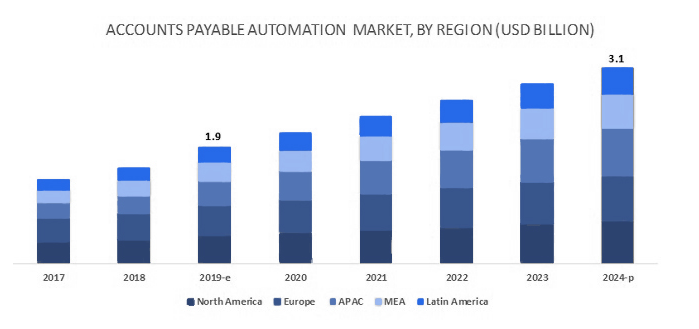
A prediction by Gartner suggests that the investment in the AP automation and invoicing software market might reach $1.75 billion by 2026, rising from around $925 million in 2021. This substantial growth indicates the necessity of automation technology.
What Does a Modern Accounts Payable Management Do?
The finance leadership of modern businesses focuses on improving governance, strengthening control, optimizing costs by reducing leakages, and channeling various sources to increase cash flows. The key focus areas of a modern AP solution include:
- Examination of accounts payable controls.
- Discovery of duplicates, excess, and false payments.
- Identification of leakages in the payment processes.
- Recovery of duplicates and excess payments.
- Reconciliation of vendor statements
- Invoice exception management
- Contract reviews
Challenges With the Traditional Accounts Payable Process
68% of the invoice data is still entered by AP teams manually. Traditional AP is an error-prone and time-consuming process. Business often experiences invoice exceptions and processing delays with this approach. These are the common challenges of relying on traditional accounts payable processes.
Time-Consuming and Error-Prone
Manual data entry increases the chances of errors. It could also lead to incorrect calculations and payments. Almost 47% of businesses identify manual data entry and inefficient processes as their primary pain points. 41% of financial decision-makers believe manual AP processes as excessively time-consuming.
Tracking Purchase Orders
AP teams must track these orders to avoid duplicate orders and unauthorized purchases. Many studies show that around 88% of manual PO documents include mistakes in data entry. 29% of professionals report challenges while tracking purchase orders with manual methods.
Friction and Inefficiency in Processing
Companies with inefficient internal processes could lead to undesirable results. Late payments or even unauthorized purchases can take place. Error rates could even be as high as 88% from incorrect data entry.
Complicated Vendor Management
Late payments could directly impact a company’s ability to maintain good vendor relationships. It also makes them miss out on flexible payment terms. AP department could spend 22% of its time managing supplier inquiries. It prevents them from focusing on other strategic tasks.
Payment Mistakes
Manual processes could lead to duplicate or excess payments. Around 80% of businesses lose up to 2% from duplicate payments annually. These mistakes could drastically impact their cash flows, and the money could even be lost forever.
Fraud and Security Risks
Traditional AP methods are always susceptible to different fraud, such as unauthorized access, invoice forgery, and payment manipulation. A staggering 95% of businesses witnessed invoice fraud in 2022.
Compliance and Regulatory Challenges
Businesses find it challenging to adhere to tax codes, regulations, vendor compliance requirements, internal audit processes, and privacy statutes while working with traditional AP processes. 47% of professionals account for invoice/payment approvals as their primary challenge, indicating a problem with regulatory compliance.
The risk is always too high, companies stick to traditional accounts payable processes and communication. A reliable solution is essential to improve your cash flow forecasts, helping a company to build its liquidity. Businesses can face critical consequences when;
- Relying heavily on error-prone manual methods to scan invoices, approve requisitions, and issue payments.
- Fail to confirm if order deliveries match agreement terms, or cannot access vendor contracts.
- Lose eligibility for early payment discounts by delaying payment cycles.
- Incorrectly feed vendor or contact information into the datasets.
Combining Automation With Direct Mail for Accounts Payable Correspondence
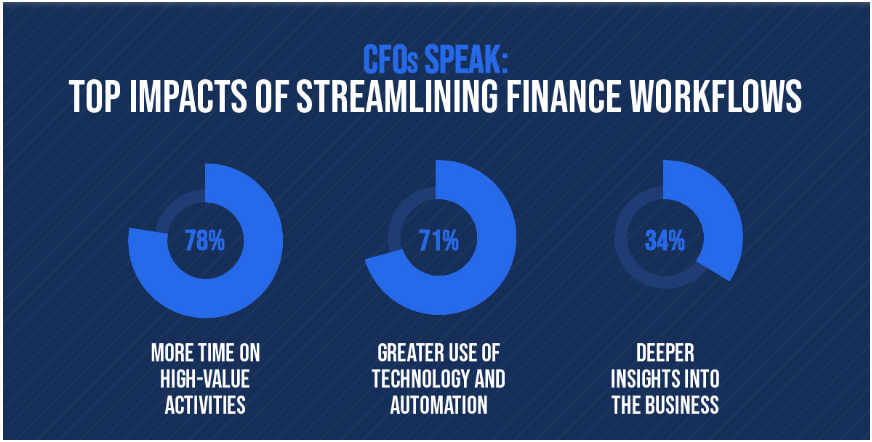
Source: Deloitte CFO Signals Q3 2022
The adoption rate of automated solutions is still relatively low. Only 23% of businesses have adapted to fully automated Accounts Payable (AP) solutions. A finance management department should consider 81% lower costs and 73% faster processing time of these new solutions.
Most businesses are likely to switch towards a fully electronic communication approach to send invoices, statements, payment reminders, and other payment documents. However, nearly 40% still prefer receiving physical transactional correspondence. This number could be even higher in some information-critical sectors like healthcare and finance.
How can Automating Accounts Payable Correspondence Help Businesses?
Professionals Have More Time to Focus on Core Strategies
A finance and administrative team could dedicate more effort where it matters instead of engaging in tedious tasks. The correspondence automation could smooth their communication without wasting time or cutting down productivity.
Avoid Unnecessary Late Fees and Interests
Automation helps you evaluate payment trends and streamline vendor communication. It stops you from making late payments and accumulating fines.
No Handwritten Errors
An automated direct mail solution also limits errors associated with manual data entry. You remain compliant while reducing significant risks.
Cost Savings on Formalities
Businesses that implement direct mail automation could save heavily on check stock, paper, envelopes, stamps, staffing, and storage. Lower invoice processing costs are necessary to avoid unnecessarily depleting revenues.
Superior Visibility Into Transactions
AP departments get higher visibility into invoices and other bills. Automation is necessary for tracking payments, understanding payment patterns, and identifying upcoming cash needs.
Higher Accuracy and Compliance
Top C-suite executives prefer automated systems to reduce human errors and ensure every AP communication is processed according to organizational policies and regulatory requirements. Compliance with financial regulations is essential for transactional mail.
Strategic Vendor Relationships
Businesses can improve their vendor relationships by sending timely payments and communications. It secures supplier confidence and may even provide discounts to companies for timely payments.
What Correspondence AP Teams Could Send Via Direct Mail Automation?
Accounts Payable documents often convey details about memberships, purchases, legal requirements, preferences, or changes to existing services. Professionals could automate sending:
- Invoices
- Account Statements
- Renewal Cycle Letters
- Account Changes
- Changes to TOC and Business Agreements
- Service Preferences
- Confirmation Details
- Access Codes or PIN Numbers
- Letters of Authority
- Debt Collection Letters
- Purchase Orders
Electronic Vs. Physical Accounts Payable Correspondence
Many firms are going fully electronic with accounts payable communication strategies. Still, 51% of businesses believe that their vendors and suppliers may not prefer electronic communication and payments. 45% of companies still manage more than half of their supplier payments through checks. It highly depends on paper invoices and physical checks.
Why Prefer Physical Correspondence Over Electronic Communication?
| Feature | Direct Mail Automation | Email Communication |
| Delivery Speed | Slower, but ensures physical delivery of the document. | Instantaneous, but could get lost in clutter. |
| Cost | Higher cost with great potential for better ROI. | Lower cost but have less impact. |
| Tracking | Basic features. Professionals can integrate their mail with digital tracking. | Advanced tracking features. However, recipients could still ignore an email. |
| Personalization | Impactful personalization, but requires more effort. | Easy customizations, but people could still overlook them. |
| Retention | Physical presence with the recipient. | Easily deleted or ignored in inboxes. |
| Response Rate | The higher response makes it an effective choice for financial communication. | Lower response due to high saturation. |
| Engagement | High engagement from physical interactions | Lower engagement. |
Also Read: 5 Leadership Lessons From Deploying Effective Accounts Payable Strategies
Best Practices to Implement Automated Direct Mail for AP Communication
Professionals can try to find reliable direct mail automation software like PostGrid Print & Mail API for their Accounts Payable (AP) communication. We often have clients seeking to streamline their AP offline correspondence.
After working with multiple AP industries, our team can suggest the following best practices for implementing automated direct mail into your AP communication processes;
Keep a Clean Master Vendor File
You can stop every human mistake if you monitor its source. Professionals should keep their vendor files up-to-date to avoid payment and communication mistakes.
Timely Communication to Avoid Misunderstandings
Businesses need to use direct mail automation to communicate payment details, such as invoice numbers, payment confirmations, and other vital documentation. It saves them from misunderstandings from the beginning.
Integrate with Existing CRM, ERP, or Accounting Software
Businesses should not leave their AP communication stranded on a deserted island of zero automation. Modern direct mail tools provide effective integration capabilities to directly pull data from existing software and ensure streamlined workflows.
Use a Multichannel Approach
Every business wants to ensure the maximum readability of its communication material. They should consider sending both email and direct mail.
Ensure Full Compliance and Security Measures
Always ensure the platform you use is fully compliant with regulatory requirements like GDPR and SOC-2. It is necessary for better regulatory adherence, cost control, risk mitigation, and audit readiness.
What Will be the Future of Accounts Payable?
Top CFOs predict effective finance transformation of the future will be dependent on these fundamental pillars:
- Improvement decision support
- Sustainable growth
- Streamlined costs
- Increase the value of services delivered
- Ensure trust across stakeholders
Remote Work Culture Will Encourage Automation in Accounts Payable
It is estimated that 32.6 million Americans will work remotely by 2025. Companies will have a hard time managing the high volume and complexity of AP processes. In contrast, businesses making payments with less effort and oversight will ensure lower tedious work.
AP Process Will Use AI for Eliminating Human Errors
The use of AI is already eliminating around 85% of manual data entry in Accounts Payable (AP). It would easily detect errors in large data sets that ordinary human eyes might miss.
The Merging Landscape of ERP and AP Systems
The rising complexity and inefficiency of Accounts Payable processes will demand businesses merge their Enterprise Resource Planning (ERP) software with AP systems. Nearly 49% of businesses are witnessing enhancements across their ERP implementations.
Conclusion
Businesses need reliable systems to execute their Accounts Payable (AP) processes. Automation can reduce the friction and challenges of traditional manual methods. An effective communication system is also essential to avoid misunderstandings and ensure timely dialogue with vendors or suppliers.
Direct mail automation streamlines a company’s communication strategy in its AP processes. Smoother integrations ensure they directly draft critical messages and documents from their existing systems.