
Reverse Geocoding API: Why is this Lookup Approach Crucial
The reverse geocoding service is the process of converting latitude and longitude coordinates into readable street addresses and postal codes. Many vendors provide this service in the form of an API or software. Reverse geocoding does the exact opposite of geocoding, which is finding geographic coordinates using specific locations.
TL;DR
- Reverse geocoding converts latitude and longitude into human-readable addresses, useful for various business applications.
- It enhances customer databases, aids in direct mail marketing, and allows for accurate delivery updates.
- Accuracy levels vary, with rooftop geocoding being the most precise, while ZIP+4 offers the least reliability.
- Address verification tools are essential to ensure the reliability of addresses obtained through reverse geocoding.
Key Takeaways
- Reverse geocoding is converting coordinates corresponding to a physical location into a human-readable address. These geocoding results enable you to use location-based services or find specific places within a state or province.
- Like geocoding results, these results are categorized into four: rooftop, parcel centroid, ZIP+4, and interpolated.
- Reverse geocoding allows you to enhance customer databases, send mail, get delivery updates, process payments, etc.
- The Google Maps platform may help you use online reverse geocoding. However, it does not guarantee accuracy and is not CASS-certified.
Reverse Geocoding has become one of the most frequently sought-after capabilities for businesses. This is true for businesses belonging to numerous industries. However, the technology is relatively new, especially for business applications. Hence, there exists a lot of confusion surrounding reverse geocoding.
As you read on, you can find answers to your questions like “What is reverse geocoding?” and learn how the process works. Furthermore, the article also explains geocoding and how it is both similar and different from reverse geocoding.
What are Geocodes?
A geocode is a set of latitudinal and longitudinal coordinates. You can use the lat-long coordinates to indicate a physical location anywhere on Earth. Their ability to show the physical location of an address makes it a vital aspect of several business applications.
Geocodes are similar to addresses in the sense that they are both used to represent a physical location. Some might even argue that geocodes are superior to addresses because they provide us with an exact location.
In a way, geocodes are superior to addresses because they can give you a pinpointed location. But geocodes are numbers that can get quite confusing. Furthermore, we don’t yet have the technology to use geocodes for standard operations such as mail deliveries.
What is Address Geocoding?
Geocoding is the process of converting the address of a location into its geocodes. Businesses, as well as individuals, use geocoding to determine the physical location of addresses. However, companies mostly use geocoding capabilities for their marketing efforts.
Furthermore, geocoding also helps businesses to streamline their business processes. For example, companies can use a geocoding API for accurate plotting of delivery coordinates. They can then use it to optimize their delivery routing. It also allows for advanced mapping that enables you to get a better understanding of your audience.
The data thus obtained through geocoding can further be utilized for advanced targeting for your marketing campaigns. Furthermore, even governmental agencies depend on geocoding for their operations. Therefore, geocoding has already become a crucial technology in today’s world.
What is the Reverse Geocoding API?
Reverse geocoding is both similar and different from regular geocoding. In geocoding, we use the address components as input to get the output, which is the geocodes of that location. Whereas in reverse geocoding, the input is the geocode of a place, and the result you get is the address.
So, you can define reverse coding as the process which converts the latitude/longitude coordinates of the location to a mapped address. Such a capability can come in handy for business applications. This is especially true if they don’t have the address data but can access the geocodes.
In short, reverse geocoding enables you to get the actual addresses you don’t even know. Although they have questionable accuracy, such a capability is a dream come true for direct mail marketers. In addition, you can use the data related to reverse geocoding for various day-to-day business operations.
Some of the major applications of reverse geocoding can be seen in the following operations.
- Direct mail marketing
- Customer database enhancement
- Device tracking
- Delivery updates
 Also Read: What are State County FIPS Codes?
Reverse Geocoding Coordinate Accuracies
There are different methods used for determining the geocodes of a location. It means both geocoding and reverse geocoding can have different levels of accuracy based on the method used. At first, you must understand the difference between these accuracies. Only then can you ensure that you have reliable address data. The primary reverse geocoding accuracies are as mentioned below.
Rooftop Geocoding
It is the highest level of accuracy when it comes to geocoding. As the name implies, the geocodes are accurate to a rooftop level. Hence, the geocodes you use for reverse geocoding accurately fall on the rooftop of the address you want to find.
Rooftop geocodes are generally used in cases that require high accuracy of geocodes. For example, telecommunication, insurance quotes, city planning, etc., are some fields you can use this geocoding. However, getting rooftop-level geocodes is usually a costly affair.
Parcel Centroid Geocoding
In parcel centroid geocoding, the center of the property is located first. It could be a commercial office building or even a complex. You can determine the address assigned to that building or complex using this type of geocode. However, parcel centroid geocodes are expensive and not always reliable in terms of accuracy.
Interpolated Geocoding
The interpolated geocodes are obtained through a mathematical formula. This geocoding uses two more geocodes and plots its middle point for plotting the location. As you can imagine, such geocoding comes with a wide margin of error and can only accurately point toward the general area of the address. Therefore, the addresses obtained using interpolated geocodes can be highly inaccurate.
ZIP+4 Level Geocoding
The ZIP+4 level geocoding or administrative area geocoding has the lowest geocoding accuracy. As the name suggests, the ZIP+4 geocodes are only accurate to the ZIP code level. So, any reverse geocoding process that utilizes ZIP+4 geocodes can only provide you with addresses that are accurate to the same level. It means that you can not connect state or provincial-level geocodes to any specific address.
Reliability of Reverse Geocoding
When we talk about reverse geocoding, it is vital that we also talk about its accuracy. However, as it is a new and budding technology yet to achieve its final form, reverse geocoding is yet to reach its prime. Therefore, the reliability of addresses obtained via reverse geocoding is questionable, at least, for now.
Now, as the accuracy of reverse geocode addresses is questionable, you need to verify such addresses. If you decide to go ahead with your direct mail campaign without verifying the accuracy of these addresses, you may end up wasting resources.
Thankfully, the verification part is easy as long as you can access an address verification API like PostGrid. In addition to this, PostGrid also comes equipped with a reverse geocoding feature. So, as long as you have a well-rounded tool like PostGrid, you can make the most out of reverse geocoding.
Why is the Reverse Geocoding API Service Important?
As we have mentioned before, companies or businesses employ reverse geocoding for several applications. But, one central aspect that has pushed for reverse geocoding in businesses is the geocodes themselves.
Sounds confusing?
Well, consider this, the geocode is a universal system that is used all around the world. Furthermore, sorting information using geocodes is much easier. This is especially true if yours is a business that deals with addresses from different countries that use their unique postal systems.
Therefore, any system that uses geocode as its base, such as geocoding and reverse geocoding, can be held to a universal standard. It also means that the reverse geocoding system can stand the test of time because it uses a sustainable model.
Reverse Geocoder Applications
One of the attractive aspects of reverse geocoding is that it identifies locations based on its geocodes. Why is this important? Because reverse geocoding enables you to access addresses that you didn’t have before using nothing but the location’s geocode.
Reverse geocoding can provide you with a reverse geocode address. The addresses are based on the nearest landmark, which can be pretty handy for businesses. Some of the major applications of reverse geocoding for businesses are listed below.
Direct Mail Marketing
Perhaps the best applicational use of reverse geocoding is in direct mail marketing. You can use geocodes to determine the address of new prospects and pitch them with well-drafted direct mail. Furthermore, you can ensure the deliverability of an address through tools like PostGrid.
Customer Database Enhancement
One of the biggest challenges faced by businesses today is their inability to maintain a quality customer database. Reverse geocoding can enhance your customer database. It even enables you to fill up the addresses that are missing from your database. You can even ensure its deliverability if you use an advanced tool like PostGrid for your reverse geocoding process.
Delivery Updates
A major application of reverse geocoding is to send accurate delivery updates. It can significantly reduce the tension of the customers who are searching for a missing or late purchase. You can provide them with real-time location updates. It will ultimately improve your customer service and your brand’s reliability.
Emergency Response
Reverse geocoding has the potential to revolutionize emergency services as we know it. For example, in an emergency, you can use reverse geocoding to accurately pinpoint the caller’s location. It will, in turn, lead to faster deployment of the emergency response and potentially save lives.
Device Tracking For Marketing
Today, most devices, such as smartphones, capture the real-time location of the user using GPS coordinates. The marketers can then tap into the location data and reveal important details of the prospects. You can then utilize it in your marketing efforts for better results.
Payment Processing
Consider an online purchase made by an international customer of yours. If you are a retailer with access to a reverse geocoding API like PostGrid, you can access the customer’s location. Once you get the user’s location, you can automatically set up your website to convert the product prices to the customer’s local currency.
The reverse geocoding applications stated above are just a few of the major ones that are currently employed. However, reverse geocoding is still in its infancy, and it has a long way to go. In other words, the application potential of reverse geocoding is only limited by your innovative thinking or the lack of it.
Also Read: Loan Companies Promotion IdeasGoogle Batch Reverse Geocoding
The most easily accessible geocoding tool you can use is none other than Google. Yes, Google can provide you with the geocode of a location. It comes with a rooftop-level accuracy, and it is free! Now, Google also supports reverse geocoding capabilities.
You must now be asking yourself right “Why not just use Google reverse geocoding?”
The answer to this question can be put into just one word – reliability. Although Google offers a rooftop level of accuracy for its geocoding, there is no guarantee that it is right.
Just think about all the situations where Google Maps took you to the wrong address, and you will understand what we are talking about. In addition to poor reliability, the reverse geocoding process using Google is slightly more complex.
And last but not least, Google does not have a USPS-certified address verification capability like in PostGrid. As a result, businesses prefer to use an address verification API equipped with reverse geocoding capability. This way, you have a more reliable way to get access to addresses via reverse geocoding.
Why You Need Address Verification Tools For Reverse Geocode Processes?
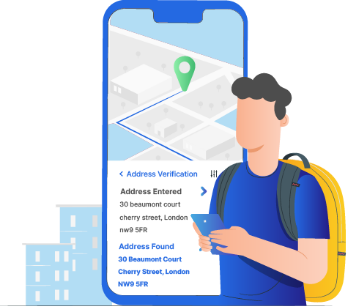
Address verification is a necessary part of reverse geocoding. This is because the address data obtained via reverse geocoding is not always reliable. For example, even using rooftop-level accurate geocodes, you can’t ensure that an address is valid and deliverable according to the USPS.
CASS Certification
CASS certification implies that the software can access the USPS’s official address database. Address verification or address validation confirms whether an address is deliverable. All you need to do is make sure that you employ a CASS-certified address verification API like PostGrid.
No Dedicated Reverse Geocoding Applications
There are no reliable dedicated reverse geocoding applications as of now. The best way to access the feature is to use an address verification software like PostGrid. This is because PostGrid comes equipped with reverse geocoding capability.
Quality Database And Additional Features
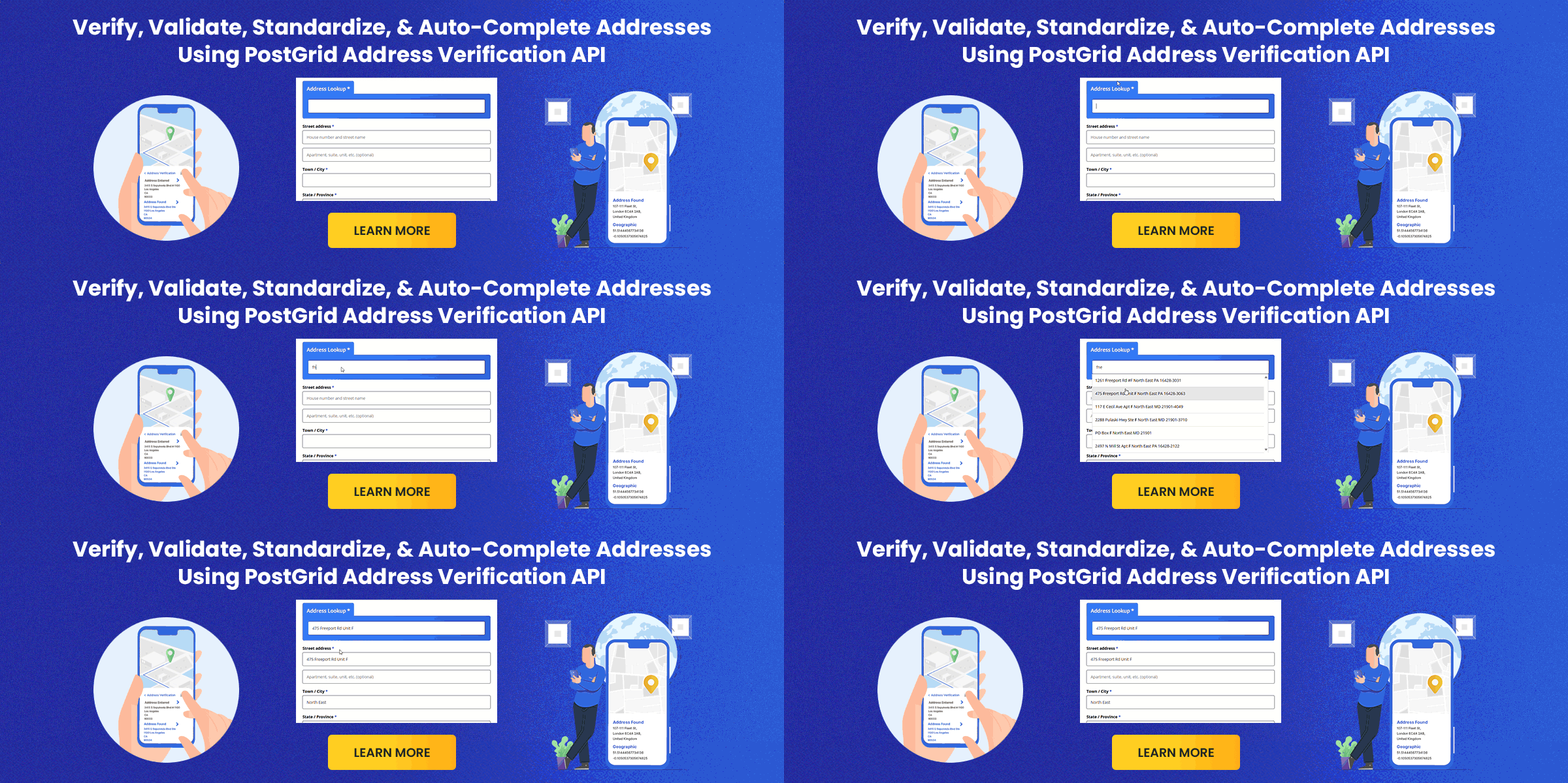
The address check can enhance the quality of your database. In other words, the addresses obtained via reverse geocoding are accurate and deliverable. PostGrid even provides you with additional features like Address Autocomplete. Such features can further enhance the user experience.
Conclusion
Reverse geocoding is quickly gaining popularity because of its numerous business applications. Even though the technology has gained popularity, it still has many limitations. Businesses often turn to reverse geocoding for their marketing efforts.
Furthermore, reverse geocoding can also help you enhance the quality of their address database. But the accuracy of the addresses obtained through reverse geocoding is questionable. Therefore, you need to ensure the accuracy of the address data obtained from reverse geocoding for your business operations.
Hence, businesses must employ an advanced address verification tool like PostGrid. Advanced tools like PostGrid come equipped with reverse geocoding and address verification capabilities.
Therefore, you can ensure the accuracy of the address data you obtain via reverse geocoding using PostGrid. In addition, the CASS-certified software can access the USPS’s official address database better than ever before. As a result, you can ensure superior quality data and ensure maximum deliverability of your direct mail.